

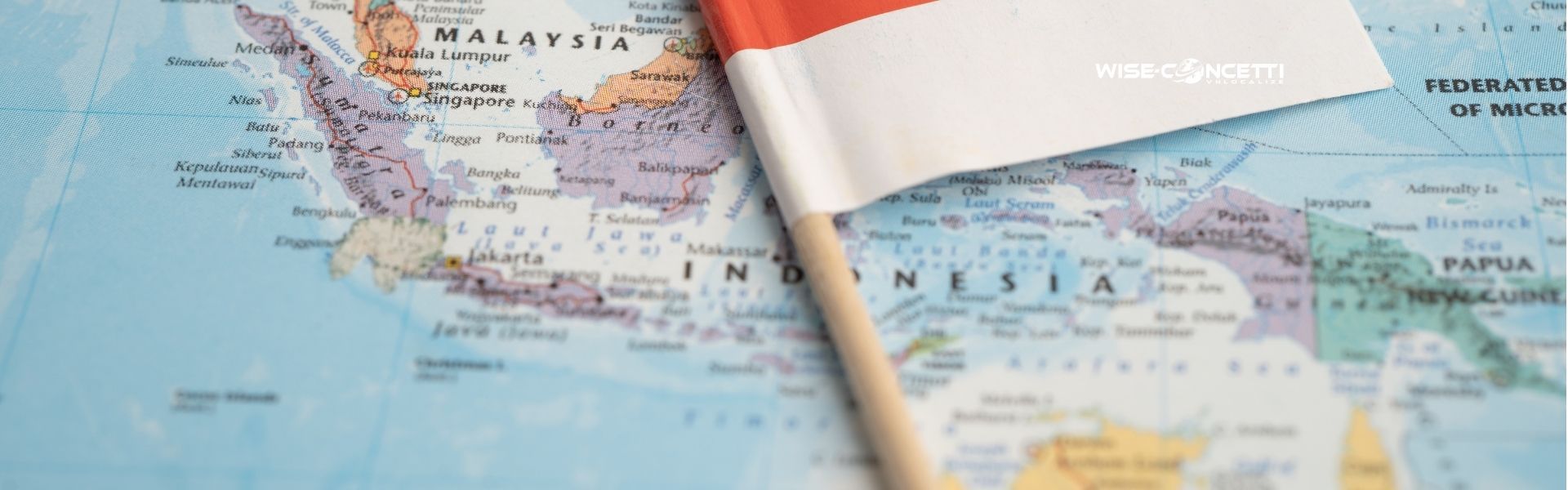
Indonesia offers significant opportunities for global companies expanding into Southeast Asia. It is the region’s largest consumer market by population and an increasingly important destination for digital products, e-commerce, technology, entertainment, and international brands.
Reaching Indonesian users effectively, however, takes more than translating English content into Bahasa Indonesia.
Indonesian localization adapts websites, software, apps, marketing content, and other digital experiences for Indonesian users. It goes beyond translation by considering local terminology, communication style, cultural expectations, formatting, user experience, and the context in which the language appears.
From choosing between formal and conversational Indonesian to deciding whether to translate familiar English technology terms, small linguistic decisions can significantly affect how natural a localized product feels.
For companies planning broader Southeast Asia localization, understanding these market-specific differences is essential.
Why Indonesia Matters for Global Businesses
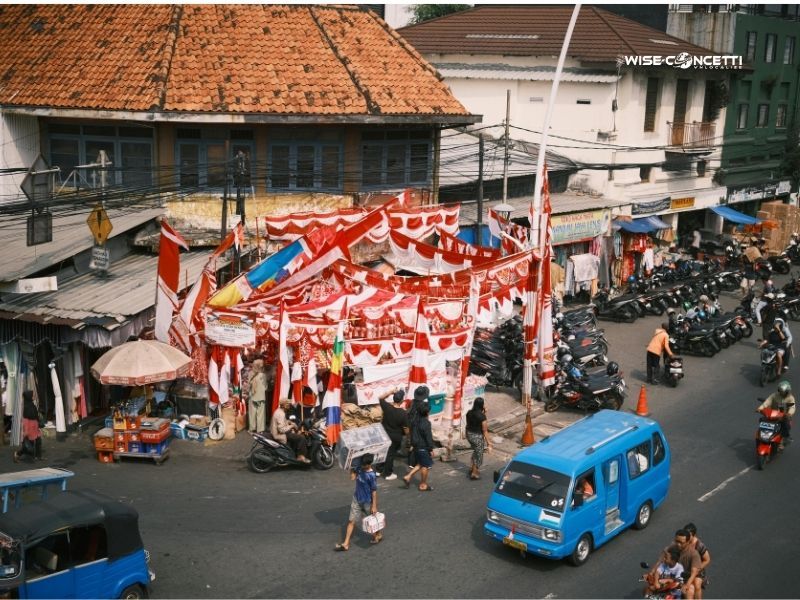
Indonesia is one of Southeast Asia's most important markets because of its scale. According to Statistics Indonesia (BPS), the country had a population of 284.67 million based on the 2025 Intercensal Population Survey (SUPAS 2025), making it the most populous country in Southeast Asia.
For global businesses, that creates opportunities across sectors including e-commerce, fintech, SaaS, gaming, healthcare, travel, entertainment, consumer technology, and digital services.
But market size alone does not guarantee adoption.
A product may function perfectly in Indonesia yet still feel foreign if its interface, terminology, customer communication, or marketing content doesn't reflect how Indonesian users naturally communicate.
This becomes particularly important when businesses move beyond internationally oriented professionals and attempt to reach a broader local audience.
English may be familiar in technology and professional environments, but Bahasa Indonesia remains central to everyday communication and public-facing experiences. Indonesia also has formal regulations governing the use of Bahasa Indonesia in many official and public contexts, including Presidential Regulation No. 63 of 2019 on the use of the Indonesian language.
Localization therefore helps companies move from simply making their content understandable to making their products feel appropriate for the local market.
What Is Indonesian Localization?
Indonesian translation and Indonesian localization are closely related, but they solve different problems.
Indonesian translation | Indonesian localization |
| Converts content from one language into Indonesian | Adapts the entire content or product experience for Indonesian users |
| Focuses primarily on linguistic accuracy | Considers language, culture, context, UX, and local conventions |
| May work at sentence or document level | Often considers the full customer or user journey |
| Usually preserves the original message and structure | May adapt terminology, tone, formatting, or presentation |
| Answers "What does this mean in Indonesian?" | Answers "How should this communicate with Indonesian users?" |
For a technical manual, straightforward translation may sometimes be sufficient.
For a mobile app, e-commerce platform, SaaS product, marketing campaign, or customer-facing website, however, localization matters much more.
A grammatically accurate sentence can still sound unnatural. A technically correct button label can still be too long for the interface. A marketing slogan can retain its literal meaning while losing its emotional impact.
Successful Indonesian localization considers all of these elements together.
Bahasa Indonesia: What Businesses Should Know
Bahasa Indonesia is Indonesia's national language and the primary language used across government, education, media, business, and communication between people from different linguistic backgrounds.
One terminology issue is worth clarifying from the beginning.
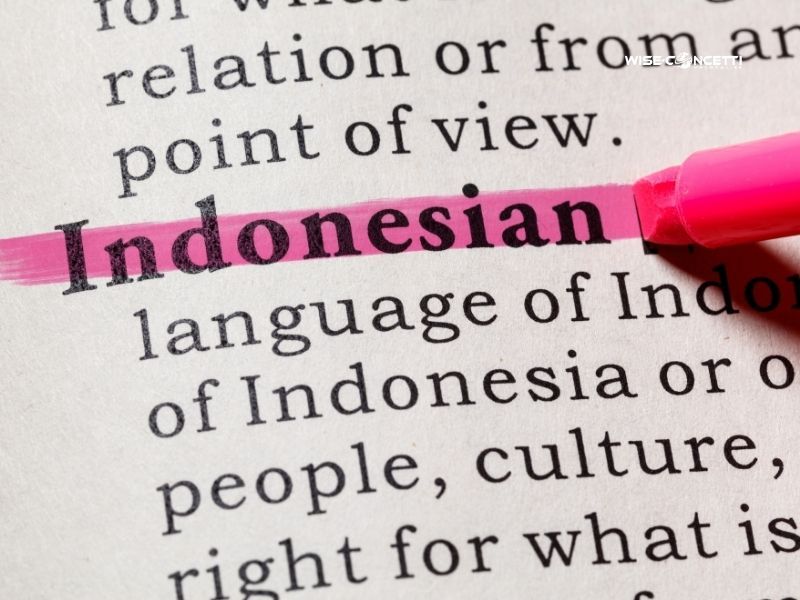
Internationally, the language is commonly called Indonesian or Bahasa Indonesia. Using only Bahasa as the language name is less precise because bahasa simply means “language.”
This distinction may seem minor, but accurate terminology matters in localization projects, especially when organizations manage multiple Southeast Asian languages.
Indonesia itself is highly multilingual, with many regional and local languages spoken throughout the country. However, Bahasa Indonesia serves as the shared national language, which makes it the primary localization language for businesses targeting the Indonesian market broadly.
That does not mean every Indonesian user communicates in exactly the same way.
Age, industry, platform, region, audience, and context can all influence how formal or conversational localized content should be.
Indonesian Is Not the Same as Malay
One of the most common misconceptions in Southeast Asian localization is that Indonesian and Malaysian Malay can be treated as one language.
They cannot.
Indonesian and Malay share historical and linguistic roots, and speakers may understand much of each other's language. However, mutual intelligibility does not mean interchangeability in local contexts.
Modern usage has developed differently across Indonesia and Malaysia. Differences appear in vocabulary, spelling preferences, borrowed words, everyday expressions, institutional terminology, and tone.
A familiar example is the English word “office.”
Indonesian commonly uses kantor, while Malaysian Malay typically uses pejabat.
Similarly, words that look identical can occasionally have different meanings or connotations across the two markets.
These differences become particularly noticeable in consumer-facing content.
A sentence adapted for Malaysian users may remain understandable in Indonesia, but it can sound unfamiliar, regionally marked, or simply not like something an Indonesian brand would normally say.
The distinction becomes even more important in:
- marketing campaigns
- websites and e-commerce platforms
- software interfaces
- customer support
- financial and legal communication
- product descriptions
- search engine optimization
Businesses targeting both Indonesia and Malaysia should therefore create separate Indonesian and Malay localization workflows rather than translating once and reusing the same content across both markets.
Key Linguistic Challenges in Indonesian Localization
Indonesian is sometimes perceived as relatively straightforward because it uses the Latin alphabet and does not have grammatical gender comparable to many European languages.
Yet localization introduces challenges that are easy to underestimate.
Formal vs. Conversational Indonesian
One of the first decisions localization teams need to make is not simply what Indonesian words to use, but what kind of Indonesian the product should use.
Formal Indonesian suits contexts such as government communication, contracts, corporate policies, healthcare information, technical documentation, and other situations where clarity and professionalism matter most.
Consumer apps, social platforms, lifestyle brands, entertainment products, and digital campaigns often use more conversational language.
The difference matters because technically correct Indonesian can still feel excessively formal.
For example, English interfaces frequently contain complete sentences such as:
“You can register your account now.”
A literal translation that retains every pronoun and grammatical element may sound unnecessarily heavy in an Indonesian interface. Depending on context, a concise CTA such as:
“Daftar sekarang”
(Register now)
may communicate the same action much more naturally.
Good localization asks whether the translation fits the product, not whether it matches the source sentence.
Pronouns and Politeness
English relies heavily on the pronoun “you.”
Indonesian offers several possibilities depending on audience and communication style, including Anda, kamu, and other forms. In many interfaces, the pronoun can also be omitted entirely.
Anda generally creates a more formal or respectful tone, while kamu feels more personal and conversational. Neither is automatically correct for every product.
A financial platform and a youth-focused entertainment app may therefore make very different localization decisions even when translating the same English source text.
The key is consistency.
Switching between formal and informal address without a clear reason can make a product's voice feel fragmented.
For ongoing localization programs, a language style guide should establish how users are addressed, what level of formality is expected, and how common UI actions should be expressed.
English Loanwords and Technology Terms
Indonesian digital communication contains many words borrowed from English.
This creates an important localization question:
Should an English technology term be translated, adapted, or left in English?
There is rarely one universal answer.
Terms related to login, email, apps, digital accounts, downloads, uploads, streaming, and other technologies may appear in both localized and English-influenced forms depending on the audience and platform.
Automatically replacing every English term with its formal Indonesian equivalent can make an interface technically correct but less familiar to users.
Leaving everything in English creates the opposite problem: the product may feel only partially localized.
The decision should therefore consider actual market usage, user familiarity, product type, industry conventions, and terminology consistency.
Native linguists are particularly valuable here because they can distinguish between terminology that is formally accepted and terminology that people actually expect to see inside a digital product.
Indonesian Words Can Expand in Translation
English UI strings are often short.
Indonesian equivalents are not always equally compact.
Indonesian frequently forms words through prefixes and suffixes such as me-, ber-, di-, -kan, and -i. As a result, a short English verb may become a considerably longer Indonesian word.
This can create problems in interfaces designed around English text.
Navigation tabs, buttons, mobile menus, forms, error messages, and responsive layouts are particularly vulnerable to text expansion.
For example, a linguistically accurate translation may fit comfortably on a desktop screen while wrapping unexpectedly on a mobile interface.
This is why Indonesian software localization should include visual and in-context review rather than relying only on bilingual file checks.
Meaning Depends on Context
Many English words cannot be translated reliably without knowing where they appear.
Consider the word “account.”
In a software interface, it may refer to an akun - a user account.
In banking, it may refer to a rekening - a bank account.
Translating isolated strings without knowing their function can therefore produce perfectly valid Indonesian words that are completely wrong for the product.
The same problem occurs with short interface strings such as:
Open
Save
Home
Order
Balance
Each can represent different actions or concepts depending on context.
Screenshots, developer comments, terminology databases, product documentation, and access to the actual interface help linguists choose the correct translation.
This is one reason in-context localization matters so much for software and digital products.
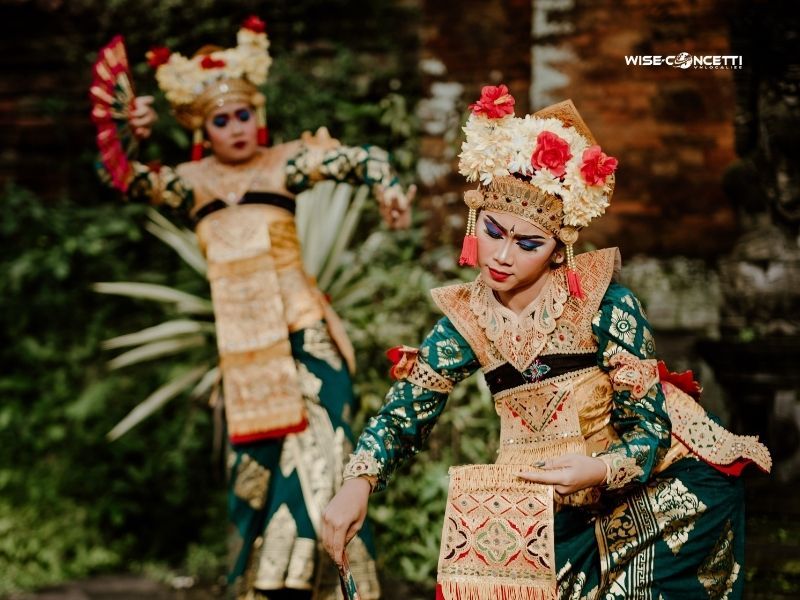
Cultural Considerations in Indonesian Localization
Localization also extends beyond vocabulary and grammar.
Communication Style Matters
The same instruction can feel helpful, demanding, distant, or friendly depending on how it is phrased.
This matters for customer-facing content such as onboarding messages, notifications, payment reminders, error messages, customer support, and calls to action.
English products often use short commands because interface design favors concise wording.
A direct translation may technically work in Indonesian, but some situations benefit from softer or more contextual phrasing.
Localization teams therefore need to balance three priorities:
clarity, interface efficiency, and appropriate tone.
Cultural and Religious Context Should Be Reviewed
Indonesia is culturally diverse, which means businesses should avoid reducing localization to a single set of stereotypes.
At the same time, cultural and religious considerations can influence how certain visual and verbal content is received.
This may apply to imagery, food references, clothing, humor, relationships, seasonal campaigns, entertainment content, and promotional messages.
High-visibility content deserves particular attention because an inappropriate visual or phrase can affect brand perception even if the translation itself is flawless.
Marketing teams should therefore evaluate the complete campaign rather than reviewing text in isolation.
Some Content Needs Transcreation Rather Than Translation
Slogans and advertising copy often depend on rhythm, emotion, humor, wordplay, or cultural references.
These elements rarely survive direct translation perfectly.
For example, reproducing every word of an English slogan may preserve its literal meaning while losing what made the slogan persuasive in the first place.
In these situations, transcreation may be more appropriate.
Instead of asking:
“How do we translate this sentence?”
the localization team asks:
“What should Indonesian users feel or understand after seeing it?”
The closer content is to emotion, persuasion, or brand personality, the more important this distinction becomes.
Indonesian Website and SEO Localization
A localized Indonesian website should not simply be an English website translated page by page.
Search behavior also needs localization.
Localize Search Intent, Not Just Keywords
Suppose an English website ranks for a particular product term.
Translating that keyword directly into Indonesian does not guarantee Indonesian users search for the same phrase.
They may use:
- a native Indonesian term;
- an English loanword;
- an abbreviation;
- a combination of English and Indonesian; or
- a completely different phrase that reflects local search behavior.
This means Indonesian SEO should begin with local keyword research, not a translated English keyword list.
The linguistically purest term is not necessarily the term users type into Google.
Localize Search-Facing Elements
Indonesian website localization should also include search-facing content such as page titles, meta descriptions, headings, image alt text, internal anchor text, and other discoverable content.
Simply translating these elements may produce awkward keywords or titles that don't reflect Indonesian search intent.
A better approach combines linguistic localization with multilingual SEO, allowing the website to communicate naturally while targeting the queries potential customers actually use.
Indonesian Software and App Localization
Software localization adds another layer of complexity because language interacts directly with the interface.
UI Space and Text Expansion
A translation can be correct and still fail visually.
Indonesian labels may be longer than their English source strings, creating truncation, awkward wrapping, misaligned buttons, or inconsistent interfaces.
This risk increases on:
- mobile screens
- navigation bars
- buttons
- form fields
- pop-ups
- notifications
- menus
Character limits can help, but they should not be the only solution. Linguists also need enough context to understand which words can be shortened without affecting meaning.
Short Strings Require More Context, Not Less
Ironically, the shortest strings can be among the hardest to translate.
A word such as “Open” could represent an instruction, a button, a status, or an adjective.
Without context, translators must guess.
Localization platforms should therefore provide screenshots, string IDs, descriptions, feature information, or other contextual references wherever possible.
Linguistic Testing Should Follow Translation
Review Indonesian software in the actual product whenever possible.
Testing can identify problems that bilingual review alone cannot reveal, including:
- truncated or overlapping text
- incorrect translations caused by missing context
- inconsistent terminology
- untranslated strings
- formatting issues
- mismatches between text and UI elements
- awkward user journeys
This makes linguistic software testing an important part of Indonesian localization, not an optional final check.
Formatting and Technical Considerations
Language is only one part of a localized user experience.
Businesses should also review local conventions for dates, time, numbers, currency, contact information, and form fields.
Indonesia uses the Indonesian rupiah, commonly represented by the symbol Rp and the currency code IDR.
Websites and applications should display prices and monetary values in a format appropriate for Indonesian users, rather than simply replacing a dollar sign with “Rp.”
Date and number formatting should also be checked throughout the product, particularly when values are generated dynamically by software rather than entered manually by translators.
Forms deserve similar attention.
Names, addresses, telephone numbers, postal information, and other customer data should not be constrained by assumptions inherited from the source market.
Technical localization therefore requires collaboration between linguists, localization engineers, developers, designers, and QA teams.
Common Indonesian Localization Mistakes
Several localization problems appear repeatedly when businesses enter Indonesia.
Treating Indonesian and Malay as interchangeable can make otherwise understandable content feel foreign to local users.
Using overly formal Indonesian throughout a digital product can create unnecessary distance, particularly for consumer-facing applications.
Mechanically translating technology terminology may replace familiar expressions with terms users rarely encounter in real interfaces.
Translating UI strings without context increases the risk of choosing the wrong meaning for short or ambiguous terms.
Translating SEO keywords directly from English overlooks the way Indonesian users actually search.
Finally, skipping native linguistic and in-context review can leave many of these problems invisible until the product reaches users.
The common thread is simple: localization quality depends on understanding how language functions in context.
What Content Should Businesses Localize for Indonesia?
Priorities depend on the product and customer journey.
Content | Why Indonesian localization matters |
| Website | Improves accessibility, local relevance, and search visibility |
| Mobile apps | Creates clearer navigation and a more natural user experience |
| Software | Ensures terminology matches workflows and product context |
| E-commerce | Helps users understand products, pricing, purchasing, and policies |
| Marketing content | Preserves brand meaning while adapting communication to local audiences |
| Customer support | Enables clearer and more consistent customer communication |
| Technical documentation | Helps users understand product functionality accurately |
| Legal and regulated content | Requires precise terminology and appropriate professional language |
| Multimedia | Makes subtitles, voice-over, and audiovisual content accessible to Indonesian audiences |
Businesses do not necessarily need to localize everything at once.
A market-entry strategy can prioritize high-impact touchpoints first, such as landing pages, onboarding, product interfaces, purchasing journeys, support content, and frequently accessed documentation.
Indonesian Localization Checklist for Businesses
Before launching localized content in Indonesia, businesses should confirm that they have addressed the following areas:
Before localization: define the Indonesian target audience, identify the content that requires localization, establish preferred terminology, decide on an appropriate level of formality, prepare reference materials, and provide linguists with sufficient product context.
During localization: work with native Indonesian linguists, maintain glossary and style-guide consistency, review English loanwords carefully, monitor UI constraints, adapt culturally sensitive content, and avoid unnecessary word-for-word translation.
After localization: conduct linguistic QA, review the content inside its actual interface, test layouts across devices, validate terminology consistency, check localized SEO elements, and update translation memories and glossaries for future releases.
Localization becomes considerably more efficient when these practices form a continuous workflow rather than being repeated from scratch for every project.
When Do Businesses Need Native Indonesian Localization Experts?
For simple internal content, basic translation may occasionally be enough.
The need for specialized localization expertise increases when content directly influences the customer experience or carries significant business, technical, or reputational consequences.
Native Indonesian localization support becomes particularly valuable for businesses launching apps or software, entering Indonesia for the first time, managing extensive product terminology, localizing regulated or technical content, running consumer marketing campaigns, or releasing updates continuously.
Native linguists bring more than fluency.
They understand whether terminology sounds natural today, whether a sentence feels unnecessarily formal, whether an English loanword is widely accepted, and whether a translated message fits the situation in which Indonesian users will actually encounter it.
That contextual judgment is difficult to achieve through translation alone.
How Wise-Concetti Supports Indonesian Localization
Effective Indonesian localization requires both local linguistic knowledge and an understanding of how localization fits into a broader international product workflow.
With in-house native linguistic expertise across Southeast Asian markets, Wise-Concetti helps businesses adapt content for Indonesian audiences while maintaining consistency across languages, products, and release cycles.
Our Indonesian localization services can cover websites, software, mobile applications, technical documentation, marketing content, multimedia, and other customer-facing materials.
For digital products, localization can also include in-context linguistic review, localization engineering, and software testing to catch issues that are hard to detect by reviewing translated files alone.
This approach is especially valuable for companies expanding across multiple Southeast Asian markets, where each language brings different linguistic, cultural, and technical requirements.
Rather than treating Southeast Asia as a single localization market, businesses can build a scalable localization strategy while still respecting the differences that make each market unique.

Frequently Asked Questions About Indonesian Localization
What is Indonesian localization?
Indonesian localization adapts content, products, websites, software, and digital experiences for users in Indonesia. It includes translation into Bahasa Indonesia as well as adjustments to terminology, tone, cultural references, formatting, user interfaces, and local conventions.
Is Bahasa Indonesia the same as Indonesian?
Yes. “Indonesian” is the English name of the language, while “Bahasa Indonesia” is its Indonesian name. In professional localization contexts, both are commonly used. Using only “Bahasa” is less precise because bahasa simply means “language.”
Is Indonesian the same as Malay?
No. Indonesian and Malaysian Malay share linguistic roots and remain related, but they differ in vocabulary, usage, terminology, expressions, and communication conventions. Businesses targeting Indonesia and Malaysia should localize content separately for each market.
Can Malay translation be used for Indonesian users?
Malay content may be partly understandable to Indonesian users, but it should not normally replace dedicated Indonesian localization for customer-facing products. Differences in vocabulary and everyday usage can make the content feel unfamiliar or inappropriate for the Indonesian market.
Do Indonesians use English on websites and apps?
English terminology is common in some industries, particularly technology and digital products, but usage varies by audience and context. Localization teams should determine whether an English term, Indonesian equivalent, or localized loanword is most familiar to target users, rather than applying one rule across the entire product.
Should software terms be translated into Indonesian?
Not always. Some English technology terms are widely recognized, while others have common Indonesian equivalents. The appropriate choice depends on user familiarity, industry conventions, product context, and the terminology used throughout the interface.
Why is context important when translating software into Indonesian?
Short English strings can have several meanings. Terms such as “account,” “open,” “order,” or “balance” may require different Indonesian translations depending on where they appear. Screenshots, string descriptions, and in-context review help linguists choose the correct meaning.
Do businesses need native Indonesian translators?
Native Indonesian linguists are particularly valuable for customer-facing, technical, marketing, and software content because localization depends on more than grammatical accuracy. Native expertise helps ensure terminology, formality, tone, and phrasing reflect how Indonesian users actually communicate.
Conclusion
Expanding into Indonesia requires more than translating content into Bahasa Indonesia. Businesses also need to consider how Indonesian users communicate, search, interact with digital products, and respond to different levels of formality, terminology, and cultural context.
A strong Indonesian localization strategy brings these elements together across language, UX, SEO, and technical implementation. From choosing the right tone and terminology to reviewing content in context and testing localized interfaces, each decision contributes to a more natural and consistent user experience.
For companies expanding across Southeast Asia, treat Indonesia as a distinct market rather than as interchangeable with neighboring countries. Working with native Indonesian linguists and localization specialists can help businesses maintain accuracy while adapting their products to local user expectations.
Planning to localize your product or content for Indonesia? Connect with Wise-Concetti to build a localization workflow supported by native linguistic expertise and deep Southeast Asia market experience.
 Trending
  Categories