



Interpretation services are now delivered through multiple channels, from traditional in-person meetings to phone calls, video platforms and remote conference systems. The right option depends on more than where the interpreter is located. Businesses must also consider the type of conversation, number of participants, need for visual cues, technical infrastructure, confidentiality requirements and interpreter expertise.
VRI, OPI, RSI and on-site interpretation each serve different communication needs. VRI connects participants and interpreters through video. OPI provides interpretation over the phone. RSI delivers simultaneous interpretation remotely during conferences and events. On-site interpretation places the interpreter physically in the room with participants.
This guide explains how these interpretation methods work, their advantages and limitations, and how to choose the right approach for your organization.
What Is the Difference Between VRI, OPI, RSI and On-Site Interpretation?
The main difference lies in how and where interpretation is delivered.
Video Remote Interpretation, or VRI, uses a video connection, allowing participants and interpreters to see one another. It is often useful when facial expressions, gestures or visual context affect the conversation.
Over-the-Phone Interpretation, or OPI, is delivered through an audio-only phone connection. It is generally suited to short, urgent or straightforward interactions that do not require visual information.
Remote Simultaneous Interpretation, or RSI, enables interpreters to listen to speakers and deliver the interpreted message almost simultaneously through a digital event platform. It is commonly used for multilingual conferences, webinars and hybrid meetings.
On-site interpretation involves an interpreter attending the location in person. It is often preferred for complex, sensitive or high-stakes interactions that require full access to the physical environment.
VRI vs. OPI vs. RSI vs. On-Site Interpretation
Factor | VRI | OPI | RSI | On-Site Interpretation |
| Interpreter location | Remote | Remote | Remote | At the event or meeting location |
| Communication channel | Video and audio | Audio only | Digital platform and audio channels | Face-to-face |
| Common interpretation mode | Usually consecutive | Usually consecutive | Simultaneous | Consecutive or simultaneous |
| Visual cues | Yes | No | Limited or platform-dependent | Full |
| Technical requirements | Camera, microphone, and stable internet | Telephone connection | RSI platform, quality audio, and technical support | Venue arrangements and, for simultaneous, audio equipment |
| Best suited for | Healthcare, education, legal interviews, and remote consultations | Customer support, hotlines, public services, and urgent assistance | Conferences, webinars, and multilingual corporate events | Negotiations, court proceedings, site visits, and sensitive meetings |
| Deployment speed | Fast | Very fast | Requires preparation | Usually requires advance scheduling |
| Relative cost | Moderate | Usually lower | Moderate to high | Moderate to high |
These are general differences rather than fixed rules. Costs, availability and setup requirements vary depending on language combinations, event size, location, technical needs and interpreter qualifications.
Interpretation Mode vs. Delivery Method
Before comparing the four options, it is important to distinguish between an interpretation mode and a delivery method.
An interpretation mode describes how the interpreter conveys the speaker’s message.
In consecutive interpretation, the speaker pauses after a sentence or section, allowing the interpreter to deliver the message in another language. This mode is common in meetings, consultations, interviews and phone calls.
In simultaneous interpretation, the interpreter listens and interprets at nearly the same time. It is commonly used for conferences, large events and meetings where delays would disrupt communication.
A delivery method describes where and through which channel the service is provided. Phone, video, remote platforms and on-site support are delivery methods.
This means that on-site interpretation can be either consecutive or simultaneous. VRI and OPI are commonly delivered consecutively, while RSI specifically refers to simultaneous interpretation provided remotely.
What Is Video Remote Interpretation?
Video Remote Interpretation connects an interpreter with participants through a secure video conferencing platform. All parties can hear and see each other, even though the interpreter is not physically present.
Because visual information is available, VRI can support conversations in which body language, facial expressions, documents or the physical setting contribute to understanding.
Advantages of VRI
VRI can provide faster access to interpreters than arranging an in-person appointment, particularly for scheduled sessions or commonly requested languages.
It also allows interpreters to observe non-verbal cues. This can be valuable in healthcare consultations, educational meetings, legal interviews and other situations where emotion, gestures or visible context affect meaning.
Compared with on-site interpretation, VRI may reduce travel expenses and make it easier to support participants in different locations.
Limitations of VRI
VRI depends on stable internet, functional cameras, clear audio and a platform that participants can use comfortably.
Poor video quality, background noise or unstable connections may interrupt communication. Some users may also feel less comfortable speaking about sensitive issues through a screen.
VRI may not be suitable when the interpreter needs to inspect a physical environment, move between locations or interact directly with multiple people in the room.
When to Use VRI
VRI may be appropriate for:
- Remote medical consultations.
- Legal interviews and client meetings.
- Parent-teacher meetings.
- Social and public services.
- Remote business discussions.
- Sign language interpretation where visual communication is required.
What Is Over-the-Phone Interpretation?
Over-the-Phone Interpretation connects participants with an interpreter through a telephone or audio call. It requires minimal technology and can often be arranged quickly.
OPI is frequently used when the conversation is short, immediate or primarily verbal.
Advantages of OPI
OPI is accessible because participants generally need only a phone connection. It can be useful for organizations operating multilingual hotlines or assisting customers across multiple locations.
Depending on the provider and language requested, businesses may be able to connect with an interpreter quickly without scheduling an in-person or video session.
Because no camera or event platform is required, OPI is often easier to implement in urgent or low-technology environments.
Limitations of OPI
The interpreter cannot see participants, documents, gestures or the physical setting. This may make it harder to understand emotional reactions, identify speakers or resolve ambiguity.
OPI may also be less effective for lengthy, highly technical or visually dependent conversations. Participants must speak clearly, avoid talking over one another and describe any relevant visual information verbally.
When to Use OPI
OPI may be appropriate for:
- Multilingual customer-support hotlines.
- Short administrative conversations.
- Emergency language assistance.
- Appointment scheduling.
- Public and government services.
- Basic communication when video is unavailable.
What Is Remote Simultaneous Interpretation?
Remote Simultaneous Interpretation allows interpreters to listen to a speaker remotely and deliver the interpreted message to participants almost simultaneously.
Listeners usually select their preferred language through an event platform, mobile application or dedicated audio channel. RSI can support several languages during the same virtual or hybrid event.
Advantages of RSI
RSI minimizes pauses and allows presentations or discussions to continue at a natural pace. This makes it suitable for conferences, webinars, town halls and large international meetings.
Because interpreters work remotely, organizations may reduce travel and accommodation costs. RSI can also make it easier to engage interpreters for multiple language combinations without bringing every interpreter to the venue.
Limitations of RSI
RSI requires more preparation than a standard video call. Audio quality, speaker microphones, platform configuration, language channels and interpreter access must all be tested before the event.
Poor sound can significantly affect interpretation quality. Interpreters may also need presentation materials, agendas, scripts and terminology lists in advance to prepare accurately.
For complex events, technical moderators, backup connections and additional interpreters may be required.
When to Use RSI
RSI may be appropriate for:
- International conferences.
- Multilingual webinars.
- Global employee meetings.
- Hybrid corporate events.
- Investor or stakeholder presentations.
- Online training programs involving several languages.
What Is On-Site Interpretation?
On-site interpretation places the interpreter in the same physical location as the speakers and audience.
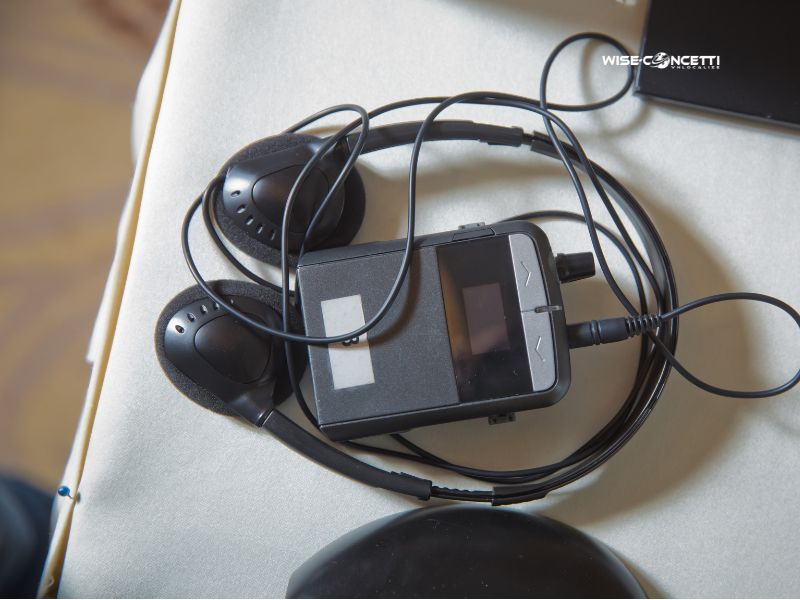
Depending on the meeting, the interpreter may work consecutively, interpret quietly for one or two participants, or provide simultaneous interpretation through booths, headsets and audio equipment.
Advantages of On-Site Interpretation
Being physically present gives the interpreter full access to the communication environment. The interpreter can observe body language, identify speakers, review physical materials and adjust to changes in the room.
On-site interpretation may be particularly valuable in complex negotiations, court proceedings, factory visits, medical settings and formal events where direct interaction is important.
Limitations of On-Site Interpretation
On-site services usually require more advance planning. Travel, accommodation, venue access and equipment may increase the total cost.
Interpreter availability can also be more limited for rare languages, remote locations or urgent requests.
For large simultaneous events, organizations may need booths, receivers, headsets, technicians and teams of interpreters who rotate during the session.
When to Use On-Site Interpretation
On-site interpretation may be appropriate for:
- Business negotiations.
- Court hearings and legal proceedings.
- Medical appointments requiring direct support.
- Factory or facility tours.
- Diplomatic meetings.
- Conferences with in-person audiences.
- Sensitive discussions involving several participants.
Which Interpretation Method Should You Choose?
Choose OPI when speed, accessibility and minimal technical setup are the main priorities. It works best for short conversations that do not depend on visual information.
Choose VRI when participants need to see one another but cannot meet in person. It is particularly useful when facial expressions, gestures or sign language contribute to understanding.
Choose RSI when a large audience needs to listen to presentations or discussions in several languages without frequent pauses.
Choose on-site interpretation when the interaction is complex, sensitive or closely connected to the physical environment.
In some cases, a combination may be more effective. A hybrid conference, for example, may use on-site interpreters for participants at the venue while remote attendees access RSI language channels.
How to Choose an Interpretation Provider
Selecting the correct method is only one part of the decision. The quality of the interpreter, preparation process and technical support can have an equally significant effect on the outcome.
Language and Regional Coverage
Confirm that the provider supports the required language pair and regional variation. Vietnamese used in Vietnam, for example, may differ from the language preferences of Vietnamese-speaking communities in other markets.
For less common languages, ask about interpreter availability, scheduling time and backup arrangements.
Interpreter Qualifications
Interpretation requires more than fluency. Medical, legal, technical and financial conversations may require interpreters familiar with industry terminology, communication protocols and confidentiality requirements.
Ask how interpreters are selected, evaluated and matched to each assignment.
Security and Confidentiality
For healthcare, legal and business communication, review how the provider protects sensitive information.
Important considerations may include encrypted connections, access controls, confidentiality agreements, recording policies, data storage and applicable regulatory requirements.
Technology and Technical Support
For VRI and RSI, confirm that the platform is compatible with participants’ devices and meeting systems.
For major events, ask whether the provider offers rehearsals, sound checks, platform configuration, technical moderation and backup procedures.
Preparation and Quality Assurance
Interpreters should receive relevant materials before complex assignments whenever possible. These may include:
- Meeting agendas.
- Presentation slides.
- Speaker scripts.
- Product information.
- Terminology lists.
- Participant names and roles.
- Previous translation materials.
A structured feedback process can also help the provider improve terminology consistency and service quality over time.
Interpretation Requirements by Industry
Different industries require different levels of specialization.
In healthcare, interpreters may need to manage sensitive conversations, medical terminology and communication between patients, families and clinicians.
In legal settings, accuracy, neutrality, confidentiality and familiarity with legal procedures are essential.
For business meetings, interpreters must understand industry terminology, organizational roles and the purpose of the discussion.
At conferences and hybrid events, success depends on interpreter preparation, speaker audio, event technology and coordination between interpreters and technical teams.
For customer service, speed, availability and the ability to manage short, unpredictable conversations may be more important than an elaborate technical setup.
Interpretation Setup Checklist
Before a meeting or event, confirm the following:
- Required languages and regional variants.
- Consecutive or simultaneous interpretation mode.
- Number and location of participants.
- Meeting format: phone, video, hybrid or on-site.
- Relevant industry expertise.
- Confidentiality and security requirements.
- Platform, microphone and headset compatibility.
- Access to agendas, scripts and terminology.
- Speaker pace and turn-taking guidelines.
- Technical and interpreter backup procedures.
- Testing or rehearsal requirements.
- Contact person responsible for coordination.
This preparation can reduce interruptions and help interpreters deliver a more accurate and natural experience.
Frequently Asked Questions
Is VRI better than OPI?
Neither method is universally better. VRI is more suitable when visual cues matter, while OPI is often faster and easier for short audio-based conversations.
What is the difference between VRI and RSI?
VRI normally supports interactive conversations through video and is often consecutive. RSI is designed for simultaneous interpretation during conferences, webinars and larger events.
Is RSI the same as simultaneous interpretation?
RSI is a form of simultaneous interpretation delivered remotely. Simultaneous interpretation can also be provided on-site.
Can on-site interpretation be simultaneous?
Yes. On-site interpreters may work consecutively or simultaneously, depending on the meeting format and available equipment.
Which interpretation method is the most affordable?
OPI is often one of the lower-cost options because it requires minimal technology and no interpreter travel. However, the final cost depends on language, duration, scheduling, specialization and provider pricing.
Which option is best for medical consultations?
VRI or on-site interpretation may be preferable when visual communication and direct patient interaction are important. OPI may be appropriate for short or urgent conversations when video is unavailable.
What equipment is required for RSI?
RSI generally requires clear speaker microphones, reliable internet, an interpretation platform, language channels and suitable headphones or devices for listeners. Larger events may also require technical support and backup systems.
How far in advance should an interpreter be booked?
Advance booking is recommended, especially for specialized, less common or simultaneous interpretation assignments. Short-notice support may be available for some common languages, but availability cannot always be guaranteed.
Choosing the Right Interpretation Solution
The right interpretation method depends on the communication context rather than technology alone.
OPI offers speed and accessibility. VRI adds visual communication. RSI supports multilingual events without interrupting the speaker. On-site interpretation provides interpreters with direct access to participants and the physical environment.
Businesses should also evaluate interpreter expertise, language coverage, confidentiality, technical reliability and preparation requirements before making a decision.
Wise-Concetti helps organizations assess these factors and develop interpretation solutions for meetings, consultations, conferences and multilingual business communication. Connect with our team to discuss the most appropriate interpretation approach for your project.
Conclusion
VRI, OPI, RSI and on-site interpretation are not interchangeable solutions. Each method serves a different communication context, from short and urgent phone conversations to visually dependent consultations, multilingual conferences and high-stakes in-person meetings. The best choice should balance accessibility, visual context, event scale, technical readiness, confidentiality and interpreter expertise. By evaluating these factors carefully, businesses can create a more reliable interpretation setup and ensure that every participant receives clear, accurate and meaningful communication.
 Trending
  Categories