

Southeast Asia is not a single-language market. It is one of the world's most linguistically diverse regions, where neighboring countries can differ significantly in language families, writing systems, levels of formality, terminology, and communication norms.
For global businesses, these differences have practical consequences. A website that works well in Indonesian may still need substantial adaptation for Malaysia. A user interface designed around English word spacing may encounter layout challenges in Thai. A marketing message translated accurately into Vietnamese may still feel unnatural if it handles pronouns, tone, or social relationships incorrectly.
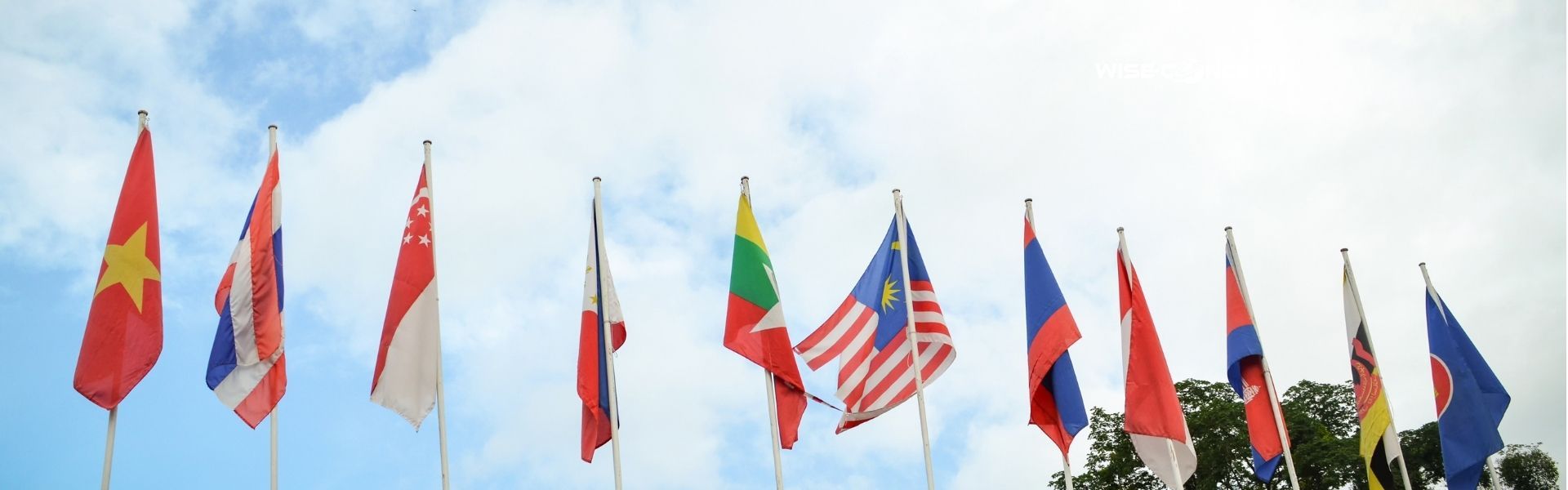
The region has also evolved politically. Since Timor-Leste formally joined ASEAN on October 26, 2025, ASEAN now consists of 11 member states, further expanding the linguistic landscape businesses need to consider when approaching Southeast Asia.
For most international localization programs, the major Southeast Asian languages to consider include Vietnamese, Thai, Indonesian, Malay, Filipino, Burmese, Khmer, Lao, and Tetum, alongside English, Chinese, Portuguese, and other languages that play important roles in multilingual markets such as Singapore, Malaysia, the Philippines, and Timor-Leste.
Understanding these languages is therefore not simply a translation issue. It is part of building a market-specific localization strategy.
What Languages Are Spoken in Southeast Asia?
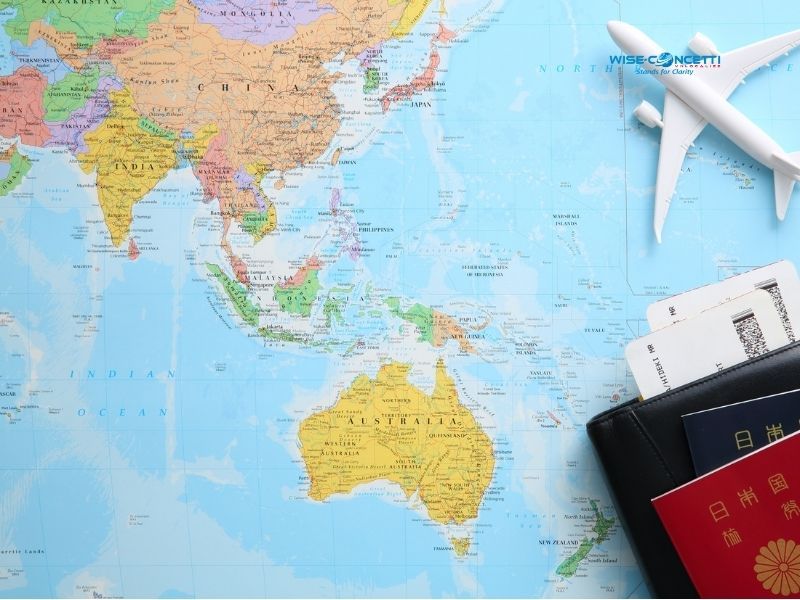
Southeast Asia contains hundreds of languages spanning several major language families. While businesses usually begin with the national or official language of each target market, the actual linguistic landscape is often much more diverse.
Indonesia alone has more than 700 languages in use, while Ethnologue identifies 175 living indigenous languages in the Philippines. This means that selecting a localization language based only on country borders can sometimes oversimplify the audience.
For most global businesses, the major market languages can be summarized as follows:
Market | Major business/official languages | Main writing system | Key localization consideration |
| Vietnam | Vietnamese | Latin-based | Tone marks, pronouns, formality |
| Thailand | Thai | Thai script | Segmentation, line breaking, politeness |
| Indonesia | Indonesian | Latin | Formal vs. conversational language |
| Malaysia | Malay, English, Chinese | Primarily Latin for Malay | Multilingual audiences and language choice |
| Philippines | Filipino, English | Latin | English influence and code-switching |
| Myanmar | Burmese | Myanmar script | Script rendering and typography |
| Cambodia | Khmer | Khmer script | Segmentation and complex typography |
| Laos | Lao | Lao script | Script handling and linguistic resources |
| Singapore | English, Mandarin, Chinese, Malay, Tamil | Multiple | Highly multilingual communication |
| Brunei | Malay | Latin/Jawi | Market-specific Malay usage |
| Timor-Leste | Tetum, Portuguese | Latin | Bilingual communication and terminology |
Timor-Leste is a particularly useful reminder that the Southeast Asian language landscape extends beyond the languages commonly associated with the region. Its constitution recognizes Tetum and Portuguese as official languages, while English and Indonesian also serve as working languages.
How Linguistically Diverse Is Southeast Asia?
The region's linguistic diversity exists at several levels.
First, countries may contain hundreds of local and indigenous languages alongside one national lingua franca. Indonesia, for example, uses Indonesian as its national language across a country where hundreds of other languages are spoken.
Second, one market may routinely use several languages depending on audience and communication context. Singapore is a clear example of a multilingual environment, while English frequently coexists with Filipino in the Philippines and Malay with other languages in Malaysia.
Third, closely related languages are not necessarily interchangeable. Indonesian and Malaysian Malay share a common linguistic history, but differences in vocabulary, usage, register, and cultural convention can still matter in customer-facing communication.
For localization teams, this means that the right question is usually not simply: “Which language is spoken in this country?”
A better question is: “Which language and language variant does our specific audience expect in this context?”
What Are the Main Language Families in Southeast Asia?
The linguistic diversity of Southeast Asia is partly explained by the presence of several different language families.
Among the most important are:
- Austronesian, which includes Malay, Indonesian, Filipino/Tagalog and many languages across maritime Southeast Asia.
- Austroasiatic, which includes Vietnamese and Khmer.
- Kra-Dai, which includes Thai and Lao.
- Sino-Tibetan, which includes Burmese and a variety of other languages in mainland Southeast Asia.
Austronesian and Sino-Tibetan are also among the world's largest language families by number of languages.
For businesses, however, the academic classification is less important than its practical consequences. Languages across Southeast Asia can differ substantially in grammar, word formation, writing systems, typography and ways of expressing relationships between speakers.
These differences affect everything from translation and terminology management to UI design, software engineering, subtitling and multilingual desktop publishing.
Major Southeast Asian Languages Global Businesses Should Know
Vietnamese
Vietnamese is the official language of Vietnam and belongs to the Austroasiatic language family. Unlike several other major mainland Southeast Asian languages, modern Vietnamese uses a Latin-based writing system. However, extensive diacritics and its tonal system make linguistic and technical accuracy important.
One of the biggest localization challenges is social context.
English can use the pronoun “you” across many situations. Vietnamese may require different forms of address depending on age, relationship, hierarchy, familiarity and context. Choices such as bạn, anh, chị, em, mình or more neutral structures can subtly change how a brand sounds.
For marketing and customer-facing content, a translation can therefore be grammatically correct while still sounding distant, overly formal or inappropriate for the intended audience.
Vietnamese localization also requires careful handling of fonts and diacritics, particularly when localized content is placed into interfaces, graphics, PDFs or legacy systems.
Business implication: Establish the audience and tone of voice before Vietnamese translation begins.
Thai
Thai is the official language of Thailand and belongs to the Kra-Dai language family. It uses its own writing system and is tonal.
From a localization perspective, one of the most visible differences from English is text segmentation. Written Thai does not use spaces between every word in the same way English does.
This becomes particularly important in:
- mobile applications
- navigation menus
- buttons
- responsive websites
- subtitles
- line wrapping
- search functions
Incorrect segmentation or line breaking can make otherwise accurate content difficult to read.
Thai communication also contains important politeness and social markers. The appropriate wording may depend on brand personality, the relationship with the audience and the level of formality expected.
Business implication: Review Thai localization both linguistically and in its final visual or product context.

Indonesian
Bahasa Indonesia is Indonesia's national and official language. It developed from Malay and today functions as a common language across a country with extensive linguistic diversity. Indonesia itself has more than 700 languages in use.
For international brands, Indonesian may appear relatively straightforward because it uses the Latin alphabet. The larger challenge is often register.
Formal Indonesian used in government, legal, corporate or educational communication can sound very different from the informal Indonesian used in advertising, social media or everyday digital communication.
A highly literal translation can consequently feel unnecessarily institutional when the product requires a conversational tone.
Business implication: Establish whether the audience expects formal, neutral or conversational Indonesian before building terminology and style guidelines.
Malay
Malay, or Bahasa Melayu, is central to communication in Malaysia and also has official or national roles elsewhere in the region.
Because Indonesian developed from Malay, the two languages share significant similarities. However, businesses should not assume that one localized version can automatically serve both Indonesia and Malaysia.
Are Malay and Indonesian the Same Language?
No. Indonesian and Malaysian Malay are closely related, but they have developed different vocabulary, usage conventions, expressions and stylistic preferences.
Differences are noticeable enough that localized media may provide separate Malay and Indonesian subtitles. Consider a simple principle: Mutual intelligibility does not automatically equal localization suitability.
A Malaysian reader may understand Indonesian content and vice versa, but understandable content is not necessarily the same as communication that feels native and market-appropriate.
Business implication: For important customer-facing content, localize specifically for Malaysia and Indonesia rather than treating Bahasa Indonesia and Bahasa Melayu as interchangeable.
Filipino
Filipino is one of the official languages of the Philippines alongside English and is based largely on Tagalog.
The Philippine market is particularly interesting because multilingual communication and switching between Filipino and English are common in many contexts. The country is also far more linguistically diverse than the Filipino-English combination alone suggests: Ethnologue records 175 living indigenous languages in the Philippines.
Are Filipino and Tagalog the Same?
The terms are closely connected but not completely synonymous.
Tagalog is the language that forms the primary basis of Filipino, while Filipino is the national language designed to develop more broadly within the multilingual Philippine context.
For businesses, the practical challenge is often deciding whether localization is necessary at all, and at what level.
An English SaaS interface aimed at highly internationalized professionals may require a different language strategy from a consumer campaign designed to build emotional connection with a broad local audience.
Business implication: Language selection in the Philippines should be audience-driven rather than based simply on national-language status.

Burmese
Burmese, also called the Myanmar language, is the most widely used language in Myanmar and belongs to the Sino-Tibetan family. It uses the Myanmar writing system.
Localization can involve both linguistic and technical challenges.
Fonts, encoding, character rendering, line wrapping and compatibility across devices must be tested carefully, particularly in software and digital products.
AI and NLP support for Burmese is also developing. A 2026 benchmark examining large language models for Burmese found that model performance varied substantially depending on architecture, language representation and instruction tuning, illustrating why businesses should avoid assuming identical AI performance across languages.
Business implication: Burmese localization workflows should account for both native linguistic review and technical validation.
Khmer
Khmer is Cambodia's national and official language and belongs to the Austroasiatic language family. It uses the Khmer script.
For digital localization, typography and segmentation deserve particular attention. Khmer text behaves differently from English, meaning interfaces designed around English text boundaries may not always adapt cleanly.
Potential issues can appear in:
- text wrapping
- input fields
- fonts
- search
- UI containers
- subtitles
- document layouts
Khmer has also historically had fewer digital linguistic resources than major global languages, making appropriate language-specific QA more important.
Business implication: Test Khmer in the actual product or design rather than approving it solely from a bilingual translation file.
Lao
Lao is the official language of Laos and belongs to the Kra-Dai family. It is linguistically related to Thai and uses its own Lao script.
Thai and Lao have similarities and a degree of linguistic proximity, but they remain separate languages with different standardized writing systems and market contexts.
Using Thai localization as a substitute for Lao simply because users may understand some Thai content would overlook the purpose of localization: communicating in the language the audience expects.
Technical considerations such as font support, line breaking, segmentation and rendering should also be included when localizing digital products into Lao.
Business implication: Approach Lao localization as its own target language rather than an extension of Thai localization.

Tetum
Tetum deserves greater attention in Southeast Asian localization following Timor-Leste's admission as ASEAN's 11th member in October 2025.
Tetum and Portuguese are constitutionally recognized as Timor-Leste's official languages. English and Indonesian also serve as working languages, creating a distinctive multilingual environment.
The appropriate localization strategy will therefore depend heavily on sector and audience. Government communication, consumer communication, education, business, legal content and international-facing material may have different language requirements.
Business implication: Companies entering Timor-Leste should assess language use at the audience and content level rather than selecting one language for the entire market.
Why Is Southeast Asian Language Localization Challenging?
Southeast Asian localization is challenging not because its languages are inherently “more difficult,” but because businesses frequently build products and translation workflows around assumptions inherited from English and other major European languages.
Those assumptions do not always transfer successfully across the region.
Multiple Writing Systems
Southeast Asia contains both Latin-script and non-Latin-script languages.
Vietnamese, Indonesian, Malay, Filipino and Tetum primarily use Latin-based systems, while Thai, Khmer, Lao and Burmese use their own scripts. This affects more than appearance.
Writing systems can influence:
- font compatibility
- character encoding
- search functionality
- input methods
- text rendering
- line breaking
- document formatting
- UI dimensions
A translation may be linguistically correct, but the final localized product may be technically unusable.
Tone and Context Can Change Meaning
Several Southeast Asian languages require translators to interpret information that English often leaves implicit.
Who is speaking?
Who are they speaking to?
What is their relationship?
How formal is the situation?
Is the brand trying to sound authoritative, friendly, youthful or premium?
These questions can influence lexical choices, pronouns, politeness markers and sentence structure.
Localization consequently requires context, not merely source text.

Social Relationships Affect Language
Vietnamese provides a particularly obvious example.
English: “Have you completed your application?”. The word “you” tells the translator almost nothing about the relationship between speaker and reader.
Vietnamese may require decisions around age, hierarchy, familiarity, and brand voice before the sentence feels natural.
Thai also includes linguistic mechanisms for signaling politeness and social relationships.
For customer-facing communication, ignoring these dimensions can make a translation sound colder, more distant, or less natural than intended.
Text Segmentation and Line Breaking Differ
Many interfaces are initially designed around languages where spaces clearly identify word boundaries. That assumption doesn't apply universally.
Thai, Khmer, Lao, and Burmese require language-aware text handling. Problems can become particularly visible when content is inserted into narrow buttons, menus, tables, mobile screens or subtitles.
This is one reason localization engineering and linguistic QA should be part of localization, not optional steps after translation.
Formal and Everyday Language Can Be Very Different
A recurring localization problem is technically correct content that sounds like a document rather than something a real user would say.
This can happen in Indonesian, Vietnamese, Malay, Filipino and other languages when formal written conventions are applied indiscriminately to:
- advertisements
- mobile applications
- social media
- customer support
- onboarding
- e-commerce
Legal documents and marketing campaigns should not follow the same linguistic strategy simply because they target the same language.
Southeast Asian Languages Are Not Interchangeable
Language similarity can reduce comprehension barriers, but it does not eliminate the need for localization.
Malay vs. Indonesian
They share common roots but have differences in vocabulary, usage, tone and market convention. Important customer-facing content should generally receive market-specific localization.
Thai vs. Lao
The languages are related, but they have different standardized writing systems and function in different national and cultural environments.
Filipino vs. Tagalog
Filipino is closely based on Tagalog, but the terms represent different linguistic and national concepts.
What About English?
English plays an important role across Southeast Asian business environments, especially in highly internationalized and multilingual markets.
However, English proficiency does not automatically remove the business case for localization.
Language choice can affect:
- accessibility
- emotional connection
- product comprehension
- customer support
- local discoverability
- brand positioning
The right question, then, is not "Can our audience understand English?”
It is: “Which language gives our audience the clearest and most appropriate experience for this particular interaction?”
Which Southeast Asian Languages Should Your Business Localize First?
No universal priority ranking exists for Southeast Asian languages. The right languages to localize first depend on your target markets, customers, product, content risk and commercial opportunity.
A company entering Vietnam and Thailand needs a very different language roadmap from one targeting Singapore and Malaysia.
Start With the Target Market
A first-level mapping may look like:
- Vietnam → Vietnamese
- Thailand → Thai
- Indonesia → Indonesian
- Malaysia → Malay, English and/or Chinese depending on audience
- Philippines → Filipino and/or English depending on audience
- Myanmar → Burmese
- Cambodia → Khmer
- Laos → Lao
- Timor-Leste → Tetum and/or Portuguese depending on use case
This is only the starting point.
Define the Customer
Within the same market, language requirements may change according to:
- age
- location
- education
- profession
- B2B vs. B2C audience
- product category
- communication channel
For example, an enterprise technology product may maintain more English terminology than a consumer healthcare campaign targeting a broad audience.
Prioritize High-Impact Content
Localization also does not require translating everything simultaneously.
Companies can often prioritize:
- Product and critical UI
- High-conversion website pages
- Customer support content
- Marketing and acquisition content
- Legal and compliance documentation
- Product documentation and knowledge bases
The goal should be to localize where language has the strongest impact on user experience, risk or commercial performance.
How Should Businesses Localize for Southeast Asian Languages?
Step 1: Define the Market and Audience
Avoid beginning with: “We need Vietnamese translation.”
Instead define: Vietnam → target customer → product → content → communication objective → Vietnamese localization requirements.
The more context translators receive, the less they need to guess.
Step 2: Choose the Right Language and Variant
Do not assume language similarity means one translation can cover multiple markets.
Identify:
- language
- market variant
- audience
- level of formality
- terminology expectations
This is especially important in multilingual markets and for related languages such as Malay and Indonesian.
Step 3: Build Terminology and Style Guidelines
Before scaling localization, establish clear guidance covering:
- product terminology
- brand names
- preferred translations
- tone of voice
- pronouns
- formality
- abbreviations
- words that should remain in English
- prohibited or sensitive terminology
Consistency becomes increasingly important as content volume, languages and translators increase.
Step 4: Localize Beyond Words
Localization should consider the complete user experience.
Depending on the product, this may include:
- currencies
- dates
- numbers
- measurement formats
- images
- icons
- screenshots
- typography
- text direction and layout
- cultural references
- user journeys
A perfectly translated sentence does not solve a button that cannot display it.

Step 5: Test Localized Products in Context
For software, SaaS products, apps and websites, localization should be validated after implementation.
Linguistic QA can identify problems such as:
- truncated text
- broken characters
- incorrect line breaks
- untranslated strings
- terminology inconsistencies
- text displayed in the wrong context
- unnatural language
- UI elements that no longer function correctly
Localization therefore continues after the translation file is delivered.
Step 6: Include Native-Language Expertise
Native linguists provide something that dictionaries, translation memories and AI systems cannot fully replace: ongoing exposure to how people actually use language in a particular market.
This becomes particularly valuable for:
- marketing
- brand communication
- UX writing
- culturally sensitive content
- emerging terminology
- humor
- tone
- high-impact customer communication
For Southeast Asian markets, where social relationships and linguistic context can strongly affect wording, native-language judgment can be especially important.
Can AI Translate Southeast Asian Languages Accurately?
AI can support Southeast Asian translation workflows, but performance varies by language, content type, model, context and quality requirements. Human review remains important when incorrect or unnatural output carries meaningful business risk.
The technology is advancing quickly, but progress is not uniform across languages.
Research published in 2026 evaluating LLM capabilities in Burmese, for example, found meaningful performance differences based on model architecture, representation and regional tuning. This illustrates a broader localization principle: strong performance in English or another high-resource language should not automatically be treated as evidence of equivalent performance across every Southeast Asian language.

Where Can AI Help?
AI-assisted translation may be useful for:
- high-volume content
- internal material
- first-pass translation
- terminology suggestions
- content where speed matters more than stylistic precision
- workflows involving professional post-editing
Where Does AI Require Greater Caution?
Human linguistic oversight becomes increasingly important when content involves:
- brand voice
- cultural references
- complex context
- pronouns and social relationships
- legal consequences
- healthcare information
- regulated content
- creative marketing
- product-critical instructions
The question should therefore not simply be: “Human or AI?”
A more useful question is: “What level of human involvement does this content require based on its language, purpose and risk?”
Choosing a Southeast Asian Language Localization Partner
Businesses expanding into several Southeast Asian countries often need more than translators working independently on individual languages.
A localization partner should be able to coordinate regional consistency while preserving local linguistic expertise.
Important areas to evaluate include:
- Native-language capability: Are linguists native or deeply in-market for the target languages?
- Regional coverage: Can the provider support several Southeast Asian markets under one workflow?
- Industry expertise: Does the team understand your terminology and regulatory context?
- Quality assurance: Are translation, review and QA responsibilities clearly defined?
- Localization engineering: Can technical issues involving software, files and layouts be handled?
- Linguistic testing: Can translations be evaluated inside the final product?
- Terminology management: Can terminology remain consistent across languages and projects?
- Scalability: Can the workflow grow as markets and content volumes increase?
- Data security: Are appropriate processes in place for sensitive information?
For businesses managing several markets simultaneously, the ideal model combines regional coordination with native, language-specific execution.
Localize Southeast Asian Languages With Wise-Concetti
Successful expansion across Southeast Asia requires more than translating content from one language into another. Businesses need localization workflows that recognize how language, culture, technology and market context interact.
With more than two decades of localization experience, Wise-Concetti supports global businesses and language service providers across Southeast Asian languages through native linguistic expertise, localization engineering, quality assurance, and multilingual production capabilities.
Our teams help businesses adapt websites, software, documents, marketing content and multimedia for markets including Vietnam, Thailand, Indonesia, Malaysia, Myanmar and other Southeast Asian destinations.
Rather than applying one localization model to the entire region, we help clients build workflows around the linguistic and technical requirements of each target market.
Planning to expand into Southeast Asia? Connect with our team to build a localization strategy for the languages and markets that matter most to your business.

Frequently Asked Questions About Southeast Asian Languages
What are the major languages spoken in Southeast Asia?
Major languages used across Southeast Asian markets include Vietnamese, Thai, Indonesian, Malay, Filipino, Burmese, Khmer, Lao and Tetum, alongside English, Chinese, Portuguese and numerous regional and indigenous languages. Which languages matter commercially depends on the target country and audience.
How many languages are spoken in Southeast Asia?
There is no single universally applicable number because language counts depend partly on how languages and dialects are classified. What is clear is that Southeast Asia is exceptionally diverse: Ethnologue lists more than 700 languages in Indonesia alone and 175 living indigenous languages in the Philippines.
What languages should businesses localize for Southeast Asia?
Businesses should choose languages according to their target markets and audiences rather than localizing for “Southeast Asia” as a whole. Vietnamese is typically required for Vietnam, Thai for Thailand and Indonesian for Indonesia, while multilingual markets such as Malaysia, Singapore, the Philippines and Timor-Leste may require more audience-specific decisions.
Are Malay and Indonesian the same language?
No. Indonesian and Malaysian Malay share historical and linguistic roots, but differences exist in vocabulary, usage, register and cultural convention. For high-impact customer-facing content, separate market-specific localization is generally preferable.
Are Thai and Lao the same language?
No. Thai and Lao are closely related languages, but they use different standardized writing systems and operate within different linguistic and cultural markets. Businesses targeting Laos should therefore not automatically substitute Thai for Lao localization.
Is English enough for businesses expanding into Southeast Asia?
It depends on the audience and context. English can work well for certain professional and internationalized audiences, but local languages may provide clearer communication and stronger cultural relevance for consumer products, customer support, marketing, regulated content and other local-facing experiences.
Which Southeast Asian languages are the hardest to localize?
There is no objectively “hardest” Southeast Asian language. Difficulty depends on the source language, content type and technology involved. Thai, Khmer, Burmese and Lao may require additional technical attention because of script and segmentation differences, while Vietnamese presents challenges involving tone, pronouns and social context.
Can AI translate Southeast Asian languages?
Yes, but quality varies significantly by language, model and use case. AI can support translation and post-editing workflows, while native human review remains particularly important for high-risk, creative, contextual and customer-facing content.
Why are native linguists important for Southeast Asian localization?
Native linguists can evaluate more than grammatical accuracy. They understand current usage, natural phrasing, formality, cultural expectations and market-specific terminology, allowing localized content to sound appropriate to the people it is intended to reach.
Conclusion
Southeast Asia offers significant opportunities for global businesses, but its linguistic diversity means that successful localization requires more than choosing a language and translating content. Each market brings its own writing systems, communication styles, cultural expectations, technical considerations, and audience preferences.
A strong Southeast Asia localization strategy should therefore combine regional coordination with market-specific execution. Businesses need to identify the right language and variant for each audience, adapt content beyond words, test localized experiences in context, and apply the appropriate balance of technology and native linguistic expertise.
By treating each Southeast Asian market on its own terms while maintaining a consistent regional localization framework, companies can create clearer, more relevant experiences and build stronger connections with local audiences as they expand across the region.
 Trending
  Categories