


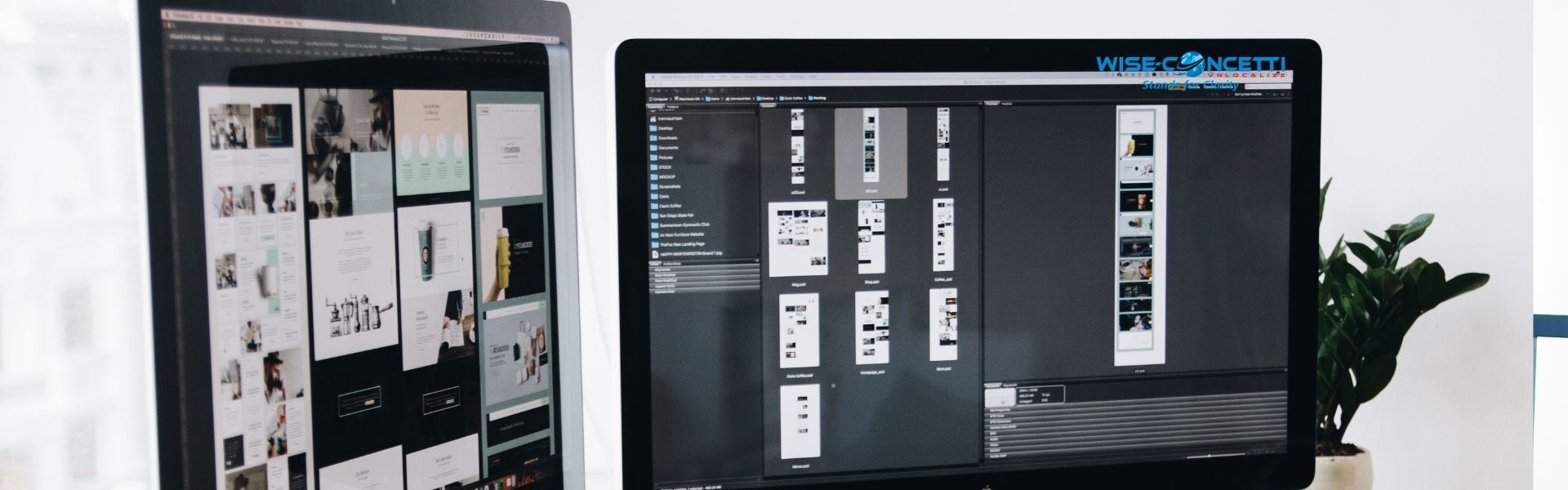
Asian language desktop publishing is more complex than simply replacing English text with a translation. Each writing system has its own requirements for fonts, character rendering, line breaks, text direction and page structure. Without language-specific DTP expertise, translated materials may contain missing characters, broken words, misplaced punctuation or layouts that are difficult to read.
Effective Asian language DTP therefore requires three capabilities: suitable publishing technology, designers who understand multilingual typography and native linguists who can review the final layout. Together, these elements ensure that documents remain accurate, readable and visually consistent across markets.
What Is Asian Language DTP?
Desktop publishing, commonly known as DTP, is the process of arranging text, images, tables and other visual elements within a document for print or digital publication. It is commonly used for brochures, manuals, reports, product catalogs, packaging, presentations and marketing materials.
In a localization project, DTP begins after the source content has been translated. The translated text must be placed into the original design while adapting the layout to the conventions of the target language.
This process may involve:
- Replacing or adjusting fonts
- Resizing text boxes and tables
- Reformatting headings and paragraphs
- Correcting line and page breaks
- Localizing charts, images and screenshots
- Applying local date, currency and number formats
- Preparing print-ready or publication-ready files
Translation focuses on communicating meaning accurately. DTP ensures that the translated content also works correctly within the visual design.
Why Asian Languages Require Specialized DTP
The term “Asian languages” covers many different writing systems, including Chinese characters, Japanese kana and kanji, Korean Hangul, Thai, Khmer, Burmese and Arabic-derived scripts such as Urdu.
These languages do not behave in the same way as English or other Latin-based languages. Some do not use spaces between individual words. Others include combining marks that appear above, below or around a base character. Certain languages can be written vertically, while others require right-to-left or bidirectional layouts.
As a result, an English document template cannot always be reused without significant adjustments. Designers must account for the linguistic and technical characteristics of each target language rather than applying one layout approach across the entire region.
Key Challenges in Asian Language DTP
Font Coverage and Missing Characters
A font that works correctly for English may not support Chinese, Japanese, Korean, Thai or Khmer characters. When unsupported characters are inserted, they may appear as empty boxes, question marks or incorrect symbols.
Even fonts that support a particular language may not include every required character or glyph. Font substitution can also change the visual appearance of the document, affecting line length, spacing and brand consistency.
Chinese localization introduces another consideration: Simplified Chinese and Traditional Chinese may require different font variants. A font designed primarily for mainland China may not display certain Traditional Chinese glyphs in the way readers in Taiwan or Hong Kong expect.
Before production begins, the DTP team should confirm that the selected fonts:
- Support the complete target-language character set
- Display punctuation and symbols correctly
- Match the brand’s visual identity
- Allow embedding or commercial distribution
- Remain consistent across operating systems and output formats
Complex Script Rendering and Combining Marks
Languages such as Thai, Khmer and Burmese use complex script behavior. A visible character may consist of a base consonant combined with vowels, tone marks or other signs positioned above, below or beside it.
When a font or publishing application does not handle these combinations correctly, marks may overlap, appear in the wrong position or become separated from their base characters. The text may still be technically present, but it can become difficult or impossible for native readers to understand.
These problems are not always detectable by someone unfamiliar with the language. A visual check by a native linguist is therefore essential, particularly when the document contains small text, narrow columns, tables or tightly spaced labels.
Word Segmentation and Line-Breaking Rules
Many Western languages rely on spaces to indicate where one word ends and another begins. Thai and Khmer generally do not use spaces between every word, so publishing software must determine appropriate places for line breaks.
If the application breaks the text at the wrong point, a word may be divided incorrectly. This affects readability and may sometimes change how a phrase is interpreted.
Chinese and Japanese also follow language-specific line-breaking conventions. Certain punctuation marks should not appear at the beginning of a line, while other characters should not be left at the end. Automatically applying English line-breaking rules may therefore create awkward or unacceptable results.
The DTP workflow should include manual review of:
- Line endings
- Headings and captions
- Narrow text boxes
- Table cells
- Bulleted lists
- Text placed around images
Text Expansion, Contraction and Layout Reflow
Translated text rarely occupies exactly the same amount of space as the source. Chinese may communicate some ideas with fewer visible characters than English, while Japanese, Korean or Southeast Asian languages may require more lines depending on the sentence structure and terminology.
Text length also varies by content type. A short English button or heading may require a longer expression in another language, while a full English paragraph may become more compact in Chinese.
These differences can cause:
- Text overflow
- Unbalanced columns
- Crowded tables
- Misaligned headings
- Oversized white spaces
- Inconsistent page breaks
Reducing the font size is not always an appropriate solution. Excessive resizing can damage readability and visual hierarchy. Designers may instead need to enlarge text boxes, adjust spacing, change image dimensions or reorganize the page.
Vertical, Right-to-Left and Bidirectional Text
Traditional Chinese and Japanese can be presented vertically in certain publications, with characters flowing from top to bottom. Vertical composition affects punctuation, text alignment, column order and the placement of Latin characters or numbers.
Traditional Mongolian also requires specialized vertical text handling and should not be treated as a standard horizontal right-to-left language.
Urdu, meanwhile, uses an Arabic-derived script and is written from right to left. Documents containing Urdu and English may require bidirectional formatting because the two languages flow in opposite directions.
Right-to-left layouts can affect more than paragraphs. Designers may also need to adapt:
- Page alignment
- Tables and charts
- Icons and arrows
- Image placement
- Navigation elements
- Number and currency positioning
Simply right-aligning the text is not enough to create a properly localized layout.
Local Dates, Numbers and Measurement Formats
Dates, currencies, decimal separators and units of measurement differ across Asian markets. A date written as 04/08/2026 may be interpreted differently depending on the audience, while some markets commonly use year-month-day formats.
Currency symbols may appear before or after a value. Decimal and thousands separators may also vary. Addresses, phone numbers and personal names follow local structures that can affect line length and field order.
These elements are particularly important in:
- Financial reports
- Product catalogs
- Application forms
- Invoices
- Technical manuals
- Medical and regulatory documents
Formatting should be localized consistently throughout the document rather than handled as an isolated translation task.
Images, Screenshots and Cultural Adaptation
DTP localization also involves visual content. Images may contain embedded text that needs translation, while screenshots may show interfaces in the source language.
Other visual elements may need adaptation because symbols, gestures, colors or maps can carry different meanings across markets. Cultural adaptation should be relevant to the document and the intended audience rather than based on broad assumptions about an entire country.
The review should consider whether:
- Embedded text has been translated
- Images remain appropriate for the local audience
- Icons and symbols are understandable
- Maps and regional labels are accurate
- Screenshots match the localized product
- Visual hierarchy remains natural in the target language
Asian Language DTP Challenges by Language Group
| Language of script | Common DTP challenge | Typical risk | Recommended review |
| Chinese | Font variants, punctuation, and line breaking | Missing glyphs or unnatural wrapping | Native linguistic and visual QA |
| Japanese | Kinsoku line-breaking rules and vertical text | Incorrect punctuation placement | Japanese typography review |
| Korean | Spacing, line wrapping, and font selection | Crowded or inconsistent layouts | Native linguist QA |
| Thai | Word segmentation and combining marks | Broken words or misplaced tone marks | Native review and font testing |
| Khmer | Complex shaping and line breaking | Incorrect character rendering | Script-compatible font and linguistic QA |
| Burmese | Stacked shaping and line breaking | Overlapping or corrupted text | Rendering and native-language review |
| Urdu | Right-to-left and bidirectional layout | Reversed alignment or misplaced numbers | RTL layout and native linguistic QA |
This comparison shows why a single DTP process cannot be applied identically to every Asian language.
DTP Considerations by Content Type
Marketing Brochures and Product Catalogs
Marketing materials often use creative typography, short headlines and tightly controlled visual layouts. Translated headings may require resizing or reflow, while product tables must remain easy to compare.
Brand consistency is important, but readability should not be sacrificed to preserve the original English layout exactly.
Technical Manuals and User Guides
Manuals commonly contain numbered steps, diagrams, warnings, cross-references and screenshots. Even a small layout change can separate an instruction from the image or warning it refers to.
DTP teams should verify page references, figure numbers, labels and the relationship between visual and written instructions.
Medical and Regulatory Documents
Medical, pharmaceutical and regulatory materials require especially careful layout control. Dosages, warnings, tables and symbols must remain clear and consistent.
Native linguistic review should be combined with visual QA to ensure that no critical information is hidden, split across pages or made difficult to read.
Packaging and Labels
Packaging provides limited space for mandatory information. Text expansion can create serious layout problems, especially when multiple languages must appear on the same label.
Designers must balance readability, regulatory requirements, branding and available print space.
Presentations and E-Learning Materials
Presentations and e-learning files often contain animations, narration scripts, interactive elements and text embedded in graphics. Each slide or screen must be reviewed in context to ensure that content appears correctly and remains synchronized with audio or visual sequences.
A Recommended Asian Language DTP Workflow
Step 1: Assess the Source Files
The team reviews the source format, page count, fonts, linked images and overall layout complexity. Missing fonts, locked files or low-resolution assets should be identified before translation and production begin.
Step 2: Confirm Font and Software Compatibility
Suitable fonts and publishing applications are selected for each language. The team tests complex characters, punctuation and script rendering before applying the design across the full document.
Step 3: Import the Translation
Translated content is placed into the original files using a controlled workflow. Designers adapt text boxes, tables, headings and page structure without unnecessarily changing the original design.
Step 4: Perform Layout Adaptation
The document is adjusted to address overflow, white space, text direction, line breaks and localized visual elements. Manual changes are made where automated formatting does not produce natural results.
Step 5: Conduct Native Linguistic Review
A native linguist checks the content within the final layout. This review focuses on broken words, incorrect punctuation, missing text, misplaced marks and any layout choices that affect meaning or readability.
Step 6: Complete Visual QA and Preflight
The final files are checked for missing fonts, low-resolution images, incorrect links, inconsistent formatting and output errors. Print files should also be reviewed for page size, bleed, image quality and font embedding.
Asian Language DTP QA Checklist
Before publication, the team should confirm that:
- All target-language characters display correctly
- No glyphs are missing or unintentionally substituted
- Combining marks are positioned correctly
- Text does not overflow or disappear
- Line breaks follow the target language’s rules
- Headings, tables and captions remain readable
- Dates, numbers, currencies and units are localized
- Images and screenshots contain the correct language
- Page references and numbering remain accurate
- Hyperlinks and QR codes work
- Fonts are embedded in final PDF files
- The layout has been reviewed by a native linguist
- The final output matches the required print or digital specifications
Common Asian DTP Mistakes
One common mistake is using a Latin-only font and assuming the publishing software will automatically find an appropriate replacement. This can create inconsistent typography across the same document.
Another is preserving English line breaks after translation. Line breaks should follow the structure of the target language, not the source layout.
Some designers also reduce the font size whenever text expands. While this may solve an overflow problem, it can make the content unreadable. Layout reflow is often a better solution.
Automated preflight tools are valuable, but they cannot reliably identify every linguistic issue. A file may pass technical checks while still containing broken Thai words, inappropriate Japanese punctuation or incorrect Urdu alignment.
Frequently Asked Questions
Is DTP included in translation services?
DTP may be offered as part of a complete localization service or as a separate production stage. The scope depends on the file format, layout complexity and required output.
Which file formats can be localized?
Common formats include Adobe InDesign, Illustrator, Photoshop, Microsoft Word, PowerPoint and various PDF-based workflows. Editable source files usually provide better results than non-editable PDFs.
Why is native review required after DTP?
A native reviewer can identify line breaks, punctuation, word segmentation and character-rendering problems that may not be visible to a designer who does not speak the language.
Can automated tools detect all DTP errors?
No. Automated tools can detect issues such as missing fonts, overflow or low-resolution images, but linguistic and cultural problems usually require human review.
What should clients provide before a DTP project?
Clients should provide editable source files, fonts, linked images, brand guidelines, reference PDFs and any market-specific formatting requirements.
Conclusion
Successful Asian language DTP depends on more than design software. It requires an understanding of how different scripts behave, how translated text affects layouts and how local audiences read and interpret visual content.
A structured workflow that combines font and software testing, professional layout adaptation, native linguistic review and final visual QA can prevent missing characters, broken line breaks and costly publication errors.
Wise-Concetti provides multilingual DTP services for Chinese, Japanese, Korean and Southeast Asian languages. With native-language resources and regional teams in Vietnam, Thailand, Malaysia and Indonesia, we help businesses prepare accurate, readable and publication-ready materials for Asian markets.
Connect with our team to discuss your multilingual DTP requirements and build a workflow suited to your languages, file formats and publishing goals.
 Trending
  Categories