



Vietnamese UI localization requires careful coordination between frontend engineering, data normalization, and localized interaction patterns. A translated string that is grammatically flawless can still break an interface layout through text overflow, clipped diacritics, or input mask failures. Global product teams often treat Vietnamese software localization as straightforward text replacement, which tends to introduce visual and functional bugs shortly before release.
Launching a digital product successfully in Vietnam involves three fundamental capabilities: flexible UI layout architecture, robust font and encoding support, and thorough in-context linguistic quality assurance. Addressing these engineering challenges early in the product lifecycle significantly reduces refactoring costs and protects user adoption across key digital touchpoints, especially when supported by dedicated Vietnamese localization practices.
The Fundamental Split: Translation vs. UI Localization
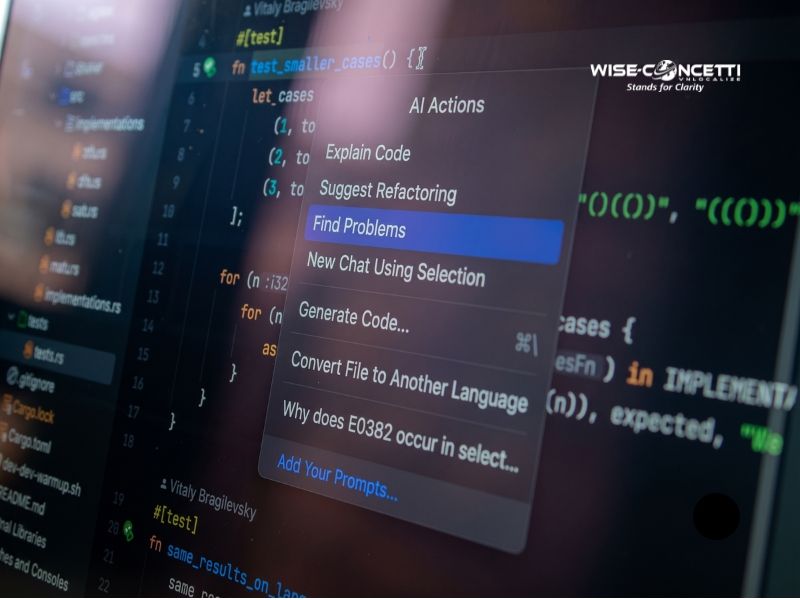
UI localization differs from document translation because strings are strictly constrained by code structure, viewport dimensions, and interactive states. Document translation primarily focuses on semantic clarity, whereas UI localization demands that text functions smoothly within interactive visual components.
Extracting source strings into flat resource bundles without context often leads to layout defects during build integration. Translators working in isolation cannot see whether a phrase belongs to a compact action button, a form field label, or a navigation header. Investing in dedicated localization for Vietnam during the design system phase helps teams avoid costly sprint delays caused by interface rework.
Critical Technical Challenges in Vietnamese UI Localization
Text Expansion and Dynamic Layout Reflow
Vietnamese text expansion typically runs 30% to 37% longer than English source copy, based on internal project data from software release cycles. This expansion can feel more pronounced in compact interface elements such as action buttons, tab navigation, and tooltips, since there is far less room to absorb the extra characters before text wraps or overflows.
For instance, brief English labels such as "Get Started" often translate to "Bắt đầu ngay", while "Settings" may require "Cài đặt ứng dụng" to maintain clarity. Fixed-width containers can cause text to break awkwardly into multiple lines or trigger uncontrolled truncation, which hides actionable context from the user. Engineering teams mitigate these layout breaks by adopting dynamic auto-layouts, defining fluid minimum widths (min-width), and eliminating concatenated strings across interface logic.
Typography, Stacked Diacritics and Unicode Encoding Bugs
Vietnamese diacritics can easily clip along top and bottom boundaries when vertical line heights are configured too tightly. Stacked diacritic characters such as "ể", "ổ", and "ữ" require noticeably more vertical headroom than standard Latin glyphs.
Selecting brand typefaces that lack complete Vietnamese glyph sets frequently triggers automatic fallback substitution by the operating system. This substitution introduces irregular baseline shifts, mismatched stroke weights, and inconsistent visual hierarchy across product views.
Unicode normalization mismatches between Composed (NFC) and Decomposed (NFD) formats also introduce subtle functional defects in search and data storage, as documented in technical standards by the Unicode Consortium. If user input arrives in NFD format while the backend database indexes content in NFC, string comparisons and search queries may fail despite identical visual appearances on the screen. Enforcing NFC normalization across ingestion pipelines resolves these encoding discrepancies reliably.
Vietnamese Input Methods and Form Logic
Vietnamese Input Method Editors (IMEs) such as Telex and VNI often conflict with reactive frontend input listeners. Keystroke composition sequences temporarily generate intermediate strings, which can trigger form validation warnings or predictive search requests prematurely if input handling is unoptimized.
Standard form structures also require adaptation to align with local conventions. Splitting personal names into rigid First Name and Last Name fields often leads to awkward ordering in local contexts, making a single unified Full Name field preferable. Address entry fields must support the standard administrative hierarchy of street address, ward, district, and province to facilitate accurate deliveries and verification.
Locale Formatting Beyond Text
Numerical displays, calendar formats, and currency signs in Vietnam adhere to local standards that basic language translation cannot address. Vietnamese convention uses periods for thousands separators and commas for decimals, reversing the standard notation used in US English.
For example, one million Vietnamese Dong is formatted as 1.000.000 ₫ rather than 1,000,000. Currency symbols typically follow the numerical value separated by a non-breaking space, while dates follow the day/month/year sequence (DD/MM/YYYY). Implementing standardized internationalization libraries such as Intl allows software systems to handle regional formatting reliably, forming an essential foundation for comprehensive Vietnamese market localization.
Mobile-First Ecosystem and Local UX Habits
The Vietnamese digital landscape is heavily mobile-first, with Android maintaining an overwhelming market share across diverse device tiers. Testing suites must therefore account for extensive screen fragmentation, varying pixel densities, and system font differences on mid-tier hardware.
According to research in the e-Conomy SEA 2024 report by Google, Temasek, and Bain & Company, digital financial services and alternative payment channels continue to experience rapid adoption across the country. Defaulting to international credit card entry fields in checkout flows often creates unnecessary purchase friction. Prioritizing native e-wallet integrations and dynamic VietQR payment options directly matches local spending behaviors and reduces cart abandonment rates.
Vietnamese UI Vulnerability Matrix
The table below outlines common interface failure points, their underlying engineering causes, and recommended implementation fixes:
UI Component | Observed Failure | Engineering Root Cause | Recommended Fix |
Buttons and Badges | Text overflows container or wraps awkwardly into two lines | Text expansion exceeding 40% combined with fixed container widths | Implement dynamic auto-layout, define min-width, and refine microcopy |
Navigation Headers | Stacked diacritics clip at top container edges | Insufficient line-height definitions relative to extended glyph metrics | Maintain a minimum line-height ratio between 1.3 and 1.4 for diacritic safety |
Search Bars | Premature queries or dropped characters during typing | IME keystroke composition conflicts with reactive input event listeners | Listen for compositionstart and compositionend events; apply debouncing |
User Profile Forms | Inverted user names and invalid address formats | Strict enforcement of Western First/Last name fields and postal codes | Implement single Full Name fields and four-tier administrative address dropdowns |
Checkout Modals | Elevated drop-off rates at transaction steps | Rigid credit-card-first hierarchy without local payment alternatives | Prioritize instant VietQR scanning and primary regional e-wallet integration |
UI Localization Considerations by Product Type
Different software categories present unique interface challenges depending on their data density and user engagement models:
- SaaS and Enterprise Dashboards: Data-heavy interfaces contain dense grids, filters, and multi-column tables. Text expansion in Vietnamese can easily cause horizontal scrolling or truncate header text. Engineers should adopt flexible column width distributions and enable user-configurable column visibility.
- E-Commerce Applications: Shopping platforms rely heavily on promotional badges, countdown timers, and streamlined checkout steps. Constrained mobile screen space requires promotional tags to be concise to avoid obstructing product imagery and pricing details.
- Fintech and Digital Banking: High transactional precision makes real-time field formatting essential. Account numbers, recipient names, and balance transfers require real-time currency formatting with dot separators to prevent accidental misallocation of funds.
- Mobile Gaming and Interactive Apps: Games frequently utilize custom rasterized or bitmap fonts that omit Vietnamese diacritics. Technical artists must generate complete glyph atlases during pre-production to avoid missing-character boxes or broken dialogue boxes during gameplay.
Common Pitfalls in Vietnamese Software Localization
Arbitrarily reducing font size to fit expanded Vietnamese copy into rigid buttons creates accessibility barriers and degrades visual consistency. Shrinking text harms legibility on high-resolution mobile devices and disrupts established typographic hierarchy across the product.
Relying solely on automated pseudo-localization tools leaves significant blind spots prior to launch. While pseudo-localization helps evaluate container capacity, it fails to reveal font substitution flaws, clipped diacritic marks, or IME composition issues. Furthermore, delivering string files to translators without accompanying visual context often leads to incorrect translations of ambiguous interface labels.
The 5-Step Workflow: From Design System to Vietnamese UI Release
A structured five-step workflow enables development teams to integrate Vietnamese localization smoothly into existing release cycles:
| [Design System Audit] -> [String Extraction] -> [Contextual Translation] -> [Device Testing] -> [In-Context LQA] |
- Design System and Font Audit: Designers confirm that primary brand typefaces cover all required Vietnamese characters and establish flexible container parameters in layout libraries.
- String Extraction and Testing: Developers isolate interface text into dedicated resource repositories and run expanded-length simulation tests within staging builds.
- Contextual Translation: Linguists translate interface strings while referencing UI mockups or interactive previews to verify appropriate terminology.
- Real-Device and Input Testing: QA engineers evaluate the application on real Android and iOS devices, validating keyboard input behavior with popular Telex and VNI engines.
- In-Context Linguistic Quality Assurance: Native reviewers navigate active software builds to verify visual presentation, text truncation thresholds, and interactive states.
Vietnamese UI Pre-Launch QA Checklist
Before shipping localized builds, release managers should audit critical interface criteria against the following acceptance checklist:
Quality Inspection Area | Verification Criterion | Validation Status |
Diacritic Integrity | Complex stacked marks such as ệ, ổ, and ữ render clearly without edge clipping. | Pass / Fail |
Typographic Consistency | Vietnamese characters match the primary brand typeface without falling back to system defaults. | Pass / Fail |
Button and Label Containment | Action text remains fully contained within component boundaries across all display sizes. | Pass / Fail |
IME Compatibility | Input fields accept continuous Telex and VNI composition without dropping characters or freezing. | Pass / Fail |
Form Data Structure | Name and local address fields correspond accurately to standard Vietnamese administrative structures. | Pass / Fail |
Locale-Specific Formatting | Thousands separators, decimal points, and currency symbols display according to vi-VN standards. | Pass / Fail |
Alternative Payment Flows | VietQR code rendering and local digital wallet integrations load and redirect reliably. | Pass / Fail |
Regulatory Compliance Note: E-commerce regulations, consumer data governance policies, and electronic payment rules in Vietnam are subject to periodic legislative updates. Product teams should verify specific compliance mandates with qualified local legal counsel prior to deployment.
How Wise-Concetti Accelerates Vietnamese Software and UI Localization
Wise-Concetti combines specialized localization engineering with native linguistic quality control to deliver dependable software experiences across Southeast Asia. Backed by more than 20 years of regional delivery experience, ISO 9001-certified quality workflows, and a dedicated in-house team of native Vietnamese linguists working directly in the market, we help technology organizations overcome complex interface localization challenges.
Our technical specialists provide dedicated localization engineering to configure Unicode-compliant data architectures and integrate automated string testing into modern CI/CD pipelines. Paired with comprehensive software testing across real mobile and desktop environments, our teams eliminate layout and input defects before they affect end users.
Explore our broader regional language capabilities on our languages page, or review our tailored domain solutions across key industries. You can learn more about our company background and quality standards on our about page, or reach out to our regional engineering leads through our contact portal to discuss your upcoming product release.
Frequently Asked Questions
Why does Vietnamese text expand more than other Asian languages?
Vietnamese uses a Latin-based alphabet enriched with tonal diacritics and compound word structures, rather than compact logographic characters like Chinese or Japanese. Expressing specialized technical and software concepts often requires multisyllabic phrasing, which naturally increases character counts and horizontal space requirements compared to English.
How do I fix cut-off diacritics in mobile app design?
Resolving clipped diacritics typically involves expanding the vertical line height (line-height) within component stylesheets and adjusting internal top padding. Designers should also select fonts with properly configured vertical typographic metrics that allocate sufficient clearance for stacked accents.
What is the difference between NFC and NFD Unicode in Vietnamese data input?
NFC combines base letters and their respective diacritics into precomposed single characters, whereas NFD separates characters into distinct base letters and combining marks. Modern web frameworks, indexing engines, and databases favor NFC to preserve consistent string matching, sorting, and storage retrieval.
Can automated translation tools handle software UI strings accurately?
Automated translation engines can accelerate early drafts but often struggle with concise UI copy that lacks broader syntactic context. Human review by native software specialists remains necessary to ensure that translated terms fit interface containers and reflect expected interaction patterns.
Conclusion
Adapting a software interface for Vietnamese users requires far more than mechanical text translation. Aligning dynamic layout architecture, robust Unicode engineering, and thorough device-level linguistic reviews ensures that digital products function smoothly across local environments. Product teams that treat localization for Vietnam as an essential engineering discipline, not an afterthought, establish a dependable operational baseline for long-term growth across Southeast Asia.
 Trending
  Categories