



Entering the Vietnamese digital economy represents a compelling expansion opportunity for global enterprises, yet converting English assets directly into Vietnamese frequently stalls during execution. A translated message or digital interface can follow standard grammar rules while still feeling robotic, awkward, or culturally disconnected to local users.
For product managers, growth marketers, and localization leads, bridging this gap requires shifting from word-for-word translation to strategic Vietnamese localization. Truly preparing for the market means adapting linguistic cadence, UI spatial constraints, regional vocabulary, and contextual intent to build authentic customer trust while preserving your core brand identity.
Linguistic Challenges That Complicate Vietnamese Translation
Linguistic precision alone rarely guarantees natural communication in Vietnamese, as the language relies heavily on pitch contours, relational structures, and character-level vertical requirements that differ sharply from Western typographic systems.
Tonal Marks and Diacritics Can Change Meaning Entirely
Vietnamese is a tonal language where diacritical marks dictate the core meaning of a syllable, meaning that omitted or misrendered tone marks can distort brand messaging or create unintended embarrassment.
Standard Vietnamese features six phonemic tones and several modified vowel glyphs (such as â, ă, ê, ô, ơ, and ư). A single base syllable like "cay" can mean "spicy" (cay), "plow" (cày), "to scratch or scrape" (cạy), or "shady / sad" (cáy), depending on the applied diacritic. Beyond vocabulary, stacked diacritics demand careful typographic management. As outlined in the W3C Internationalization Typography Guidelines, languages utilizing combining characters require adequate line-height (leading) in CSS and mobile UI wrappers; otherwise, upper and lower diacritical marks risk clipping against button borders and adjacent lines.
English Sentence Structures Often Sound Stiff in Vietnamese
Direct grammatical transfers from English typically sound mechanical in Vietnamese, because natural Vietnamese phrasing favors passive-to-active transformations and conversational conciseness.
When source strings are translated verbatim, they carry over Western syntax that immediately signals an imported product. Consider how common B2B callouts translate:
- Source English: "Please feel free to reach out to our team if you need further assistance."
- Literal translation (stiff): "Xin vui lòng cảm thấy tự do để liên hệ với đội ngũ của chúng tôi nếu bạn cần thêm hỗ trợ."
- Natural localized phrasing: "Đội ngũ của chúng tôi luôn sẵn sàng hỗ trợ khi bạn cần."
The localized version communicates the exact same brand warmth while respecting how Vietnamese professionals naturally communicate.
Text Expansion Affects UI and Layout Planning
Vietnamese translations routinely require more horizontal and vertical canvas space than source English strings, necessitating flexible interface containers across web and mobile viewports.
According to research documented by the W3C Working Group on Text Size in Translation, short English strings under 20 characters frequently experience an expansion rate of 180% to 200% when rendered into other languages. This matches observations from enterprise projects handled by the Wise-Concetti team, where Vietnamese translation strings typically expand by 30% to 37% overall, with short UI labels expanding even more.
| English Source: "Book now" (8 characters) Direct Vietnamese: "Đặt phòng ngay hôm nay" (22 characters - 175% text expansion) Optimized UI: "Đặt ngay" (8 characters) |
Without in-context multilingual desktop publishing and flexible UI engineering, hard-coded CTA containers will truncate text, break responsive cards, and degrade user conversion rates.
Cultural Barriers in Localization for Vietnam

Linguistic fluency fails if a brand overlooks cultural etiquette, because communication in Vietnam is inherently relational, contextual, and sensitive to social hierarchy.
Forms of Address Signal Relationship and Respect
Pronoun selection in Vietnamese immediately establishes the social dynamic between an enterprise and its user, making generic pronoun choices risky for commercial positioning.
Unlike English, which uses the neutral pronoun "you", Vietnamese utilizes a complex network of interpersonal address based on age, seniority, and professional distance, including terms like anh, chị, em, bạn, and quý khách.
- Addressing prospective B2B buyers or wealth management clients casually as "bạn" can feel disrespectful or amateurish.
- Defaulting to "quý khách" on a fast-paced fintech app targeted at Gen Z can feel excessively stiff and distant.
- Using "chúng tôi" (exclusive "we") versus "chúng ta" (inclusive "we") changes whether the brand positions itself as an external service provider or a collaborative partner.
Calibrating these forms of address is an essential part of localization for Vietnam, not a routine grammar check.
Literal Translation Can Distort Marketing Intent
Translating marketing taglines or idiomatic campaigns word for word often strips away their emotional resonance, leaving local audiences confused or indifferent.
Consider the classic creative idiom "Hit the ground running". A literal translation referencing feet touching earth makes little sense to a Vietnamese professional, whereas transcreating the sentiment into "Khởi động bứt phá" (Launch with breakthrough momentum) immediately evokes the intended vigor. Similarly, creative campaign angles like "Spring Cleaning Sale" do not align with local seasonal shopping habits unless reframed around familiar local milestones such as pre-Tet home renewal.
Symbols and Cultural References Are Context-Dependent
Visual assets, color choices, and iconography carry regional cultural connotations that should be evaluated within their specific communicative context rather than through rigid generalizations.
While bright red and yellow accents frequently evoke festivity and fortune during regional celebrations, their effectiveness varies significantly across B2B enterprise dashboards, medical applications, and modern consumer tech. Product teams must assess visual metaphors alongside localized copy to ensure icons, holiday references, and payment badges feel culturally intuitive rather than foreign.
Regional Differences Businesses Often Underestimate
While Vietnam shares an official written language, regional vocabulary, spelling preferences, and colloquial idioms differ across the Northern, Central, and Southern regions.
Vocabulary and Spelling Vary Across the Country
Everyday consumer terminology, culinary vocabulary, and even administrative phrasing diverge across geographic regions, directly impacting user familiarity and trust.
English Meaning | Northern Usage (Bắc) | Central Usage (Trung) | Southern Usage (Nam) | Localization Takeaway |
| Pork | Thịt Lợn | Thịt Heo | Thịt Heo | Essential for e-commerce, grocery apps, and F&B platforms. |
| Spoon | Thìa | Muỗng/Thìa | Muỗng | Essential for e-commerce, grocery apps, and F&B platforms. |
| Cup / Glass | Cốc | Ly / Cốc | Ly | Crucial for food, beverage, and retail ordering menus. |
| Pineapple | Dứa | Thơm / Khóm | Khóm / Thơm | E-commerce catalog categorizations. |
Some Words Carry Entirely Different Meanings by Region
Certain lexical items carry completely distinct meanings depending on the user's geographic location, which can lead to genuine operational errors if left unadjusted.
A notable example in consumer tech is the term "mận":
- In Northern Vietnam, quả mận refers to a temperate purple plum.
- In Southern Vietnam, quả mận refers to a bell-shaped Java apple / water rose apple (which Northerners call quả roi).
Similarly, navigating physical space requires localized precision: "tầng 1" indicates the street-level ground floor in Northern office buildings, whereas in Southern conventions it often designates the first floor elevated above ground level (tầng trệt). Delivery apps, mapping services, and real estate portals must account for these geographical differences.
Not Every Campaign Needs Three Regional Versions
Managing regional diversity does not mean an enterprise needs to deploy three parallel codebases or marketing sets for every launch.
In most digital product rollouts, maintaining three localized variations across an entire platform is neither budget-efficient nor necessary. The pragmatic strategy in Vietnamese market localization is to deploy a balanced, nationally accepted standard for core UI text, while introducing targeted regional phrasing selectively for geo-fenced promotions, push notifications, and local ad creatives.
Translation vs Localization: Where Businesses Draw the Line Wrong
Many international brands falter by treating localization simply as high-speed translation, failing to identify which customer touchpoints demand deep transcreation.
Content Types That Usually Need Full Localization, Not Just Translation
Different business content streams require distinct localization depths, ranging from strict semantic fidelity to creative cultural reinvention.
Content Category | Primary Objective | Translation Sufficiency | Recommended Localization Strategy |
Technical Specs & API Docs | Accuracy & compliance | High | Direct translation with strict terminology controls. |
Legal Terms & Privacy Policies | Risk mitigation & legality | High | Semantic translation with local legal formatting review. |
Customer Support & Knowledge Bases | Self-serve issue resolution | Moderate | Translation combined with native tone polishing. |
App UI, Microcopy & CTAs | Frictionless UX & conversion | Low | Full localization with UI constraint testing and character caps. |
Brand Taglines & Marketing Copy | Emotional engagement & trust | Low | Native transcreation tailored to local buyer psychology. |
A Simple Test: Would a Vietnamese User Naturally Say This?
A practical litmus test helps localization managers verify whether copy is market-ready before rollout.
Instead of asking whether a translated paragraph mirrors the original English sentence structure, review teams should present the Vietnamese copy in isolation and ask: "Would a native Vietnamese consumer naturally phrase their thought this way?" If the sentence sounds stilted or unmistakably imported, adhering strictly to the source phrasing will not rescue user engagement.
SEO and Search Intent: A Challenge Businesses Often Miss
Translating an English keyword master list literally into Vietnamese is unlikely to generate meaningful organic traffic, because local search queries reflect distinct local intent structures.
Vietnamese Market Localization Requires Localizing Intent, Not Just Keywords
Organic search visibility in Vietnam demands researching how local buyers formulate queries, rather than translating high-performing Western keywords.
Search engine algorithms reward content matching natural search habits. Consider the English target query "reliable cloud ERP software":
- Literal keyword translation: "phần mềm ERP đám mây đáng tin cậy" (Virtually zero search volume; sounds translated).
- Intent-driven query A: "phần mềm ERP cho doanh nghiệp vừa và nhỏ" (High commercial intent: ERP software for SMEs).
- Intent-driven query B: "báo giá phần mềm quản trị doanh nghiệp cloud" (High purchase intent: cloud business management software quote).
Capturing qualified organic traffic requires in-depth search query discovery conducted by native speakers using local search analytics tools.
Common Mistakes That Undermine Vietnamese Localization Projects
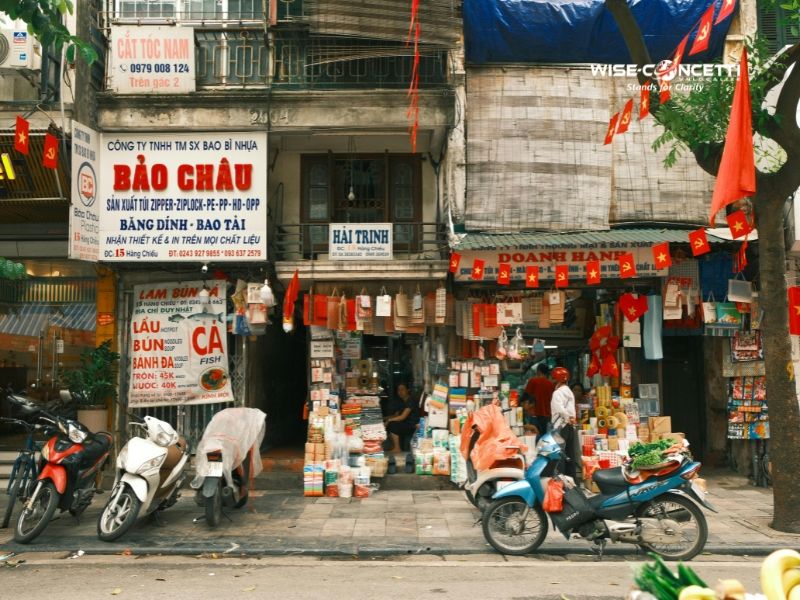
Cross-border localization programs encounter friction most frequently from process oversights rather than poor linguistic capabilities alone.
Treating AI Translation as a Final Step, Not a Draft
Relying on raw AI output or automated machine translation without professional human post-editing introduces subtle tone mismatches and context blindness.
While modern neural machine translation and LLM engines offer operational speed for draft workflows, they frequently struggle with Vietnamese diacritical nuance, familial pronouns, and technical domain jargon. Deploying raw machine-generated Vietnamese directly into production environments creates reputational risks when tonal subtleties are misunderstood.
Inconsistent Terminology Across Touchpoints
Failing to maintain a centralized terminology database creates disjointed user experiences across products, help centers, and billing systems.
When disparate engineering teams, growth marketers, and external vendors work in silos, a single feature can end up with multiple conflicting translations. This fragmentation confuses users, increases support ticket volume, and diminishes the perception of professional quality.
Reviewing Language Separately From the Actual User Interface
Validating translated strings exclusively inside spreadsheets or translation management tables blinds teams to rendering and layout failures.
A localized string that looks balanced within a spreadsheet cell can easily truncate inside a responsive mobile header, overlap adjacent input elements, or distort checkout flow containers. Testing content inside staging builds through dedicated localization engineering is essential for identifying layout friction before public release.
How Global Businesses Can Prepare Before Localizing for Vietnam
Establishing clear contextual resources and quality control assets prior to kickoff simplifies market entry and protects product quality.
Give Linguists Full Context, Not Just Source Text
Linguists produce superior results when supplied with product wireframes, UI string limits, and target user personas.
A UI string as simple as "Dismiss" requires different Vietnamese adaptations depending on context:
- An optional modal notification: "Để sau" (Maybe later)
- A critical system alert: "Bỏ qua" (Ignore / Skip)
- Closing an interactive tooltip: "Đã hiểu" (Understood)
Providing UI screenshots, design system context, and component constraints prevents linguistic ambiguity.
Build a Vietnamese Style Guide and Terminology Base Early
A well-structured language style guide and corporate glossary align internal teams and external translation partners around shared standards.
An actionable Vietnamese style guide formalizes:
- Pronoun conventions across consumer versus enterprise touchpoints.
- Standardized regional terminology and capitalization guidelines.
- Punctuation and formatting for local currency symbols (VND / đ), dates, and decimal indicators.
- Treatment of loan words (whether technical terms like API, Cloud, or Dashboard remain in English or require native descriptors).
Combine AI Speed With Human Cultural Review
The most effective localization workflow combines automated translation efficiency with native subject-matter human review.
Enterprises achieve scalable efficiency by using machine translation engines for initial string processing, followed by native Machine Translation Post-Editing (MTPE). This hybrid model maximizes throughput while ensuring human linguists safeguard context, brand voice, and cultural resonance.
FAQ
What is the biggest challenge in Vietnamese translation for global businesses?
The primary challenge is moving past literal linguistic accuracy to achieve natural cultural and contextual resonance. Adapting tones, managing interpersonal pronouns, accommodating UI text expansion, and accounting for regional nuances require specialized native expertise.
Do regional differences really affect Vietnamese market localization?
Yes. Regional preferences in everyday vocabulary, spelling conventions, and food or lifestyle terms differ between Northern, Central, and Southern Vietnam. While building separate versions of an entire platform is rarely necessary, brands should use a neutral national standard for core software and deploy regionalized messaging for targeted campaigns.
Is machine translation reliable enough for localization for Vietnam?
Machine translation is valuable for rapid drafting and internal comprehension, but it is not sufficient on its own for customer-facing interfaces or brand campaigns. Automated engines struggle with Vietnamese diacritical precision, honorific structures, and contextual register, making native human review indispensable.
How is localization different from simple translation?
Translation focuses on transferring the semantic meaning of text from one language to another. Localization adapts the complete product experience, including UI constraints, regional vocabulary, cultural references, imagery, and search intent, ensuring the product feels organically designed for Vietnamese users.
Conclusion
Preparing for Vietnamese Localization Means Preparing for More Than Language
Successful expansion into Vietnam requires understanding that effective localization encompasses far more than swapping English words for Vietnamese equivalents. It demands an appreciation for tonal precision, relational etiquette, regional distinctions, and localized user experience expectations. Global organizations that invest in comprehensive localization build deeper customer trust and secure sustainable competitive advantage in Southeast Asia's growing digital market.
Navigating these complexities is substantially smoother with an experienced in-market partner. With over 20 years of experience supporting global enterprises, Wise-Concetti provides dedicated in-house native Vietnamese linguists operating directly within the market. Backed by ISO-certified workflows and deep domain expertise across technology, e-commerce, and finance, our teams help you evaluate your localization readiness and deliver natural, market-ready experiences for Vietnamese users.
Ready to assess your product readiness for Vietnam? Contact the Wise-Concetti team today to schedule a consultation or request a comprehensive localization readiness assessment.
 Trending
  Categories