



Expanding into Thailand may appear straightforward from a localization perspective: translate your website, software, app, or marketing content into Thai, adapt a few local formats, and prepare for launch.
In practice, Thai language localization involves much more than replacing English words with Thai equivalents. Differences in writing structure, social register, typography, cultural conventions, and digital formatting can directly affect how users understand and interact with a product.
Thai localization is particularly challenging because linguistic decisions often influence technical and UX outcomes. A translation may be grammatically correct but still feel unnatural, appear incorrectly in an interface, or communicate the wrong level of politeness to the target audience.
For global businesses, successful Thai localization therefore requires a combination of native linguistic expertise, cultural understanding, technical preparation, and in-context quality assurance. These considerations also reflect the broader challenges companies face when building a Southeast Asia localization strategy across linguistically diverse markets.
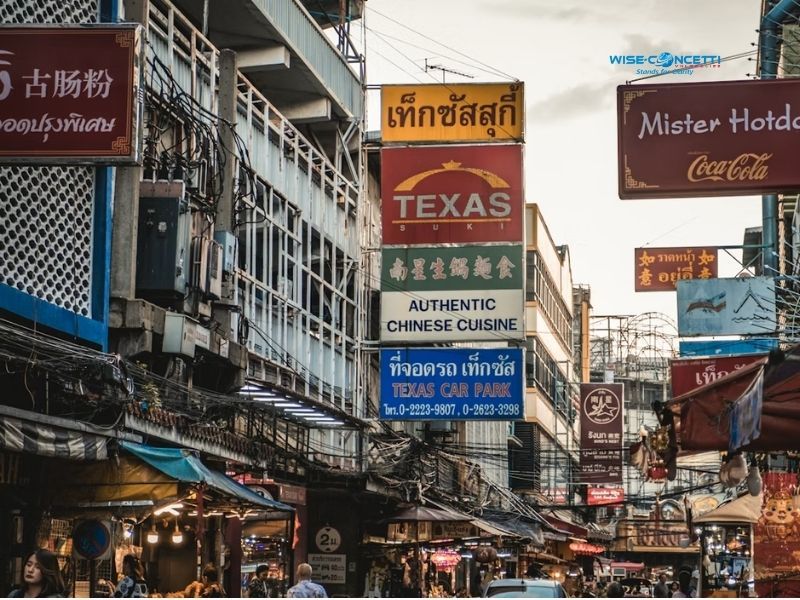
What Is Thai Language Localization?
Thai language localization is the process of adapting content, products, and digital experiences for users in Thailand.
Translation is an important part of this process, but localization goes further. It considers how language interacts with local communication conventions, user expectations, interface design, technical systems, and cultural context.
For example, translating a mobile application into Thai may involve converting English UI strings into Thai, but localization also requires checking whether those strings fit correctly inside buttons, whether the fonts render Thai characters properly, whether dates and currency are displayed appropriately, and whether the tone sounds natural to Thai users.
Thai Localization vs. Thai Translation
The difference can be summarized simply:
Translation | Localization |
| Converts English text into Thai | Adapt the full experience for Thai users |
| Focuses mainly on linguistic meaning | Considers language, US, culture and technology |
| Maybe completed outside the final product | Often requires in-context testing |
| Translates marketing messages | Adapts tone, references, and emotional impact |
| Translates interface strings | Ensures strings display and function correctly |
For simple internal documents, translation alone may sometimes be sufficient. For customer-facing websites, software, e-commerce platforms, marketing campaigns, and mobile applications, localization usually requires a broader approach.
Why Is Thai Localization Challenging?
Thai localization is challenging because the language differs significantly from English in its writing system, sentence structure, social register, typography, and communication conventions.
These differences can create problems that go beyond linguistic accuracy. They may affect line breaking, UI layouts, search functionality, brand tone, user comprehension, and even software behavior.
A useful way to approach Thai localization is therefore not simply to ask, “Is the translation correct?” Businesses should also consider whether the localized content is natural, culturally appropriate, technically functional, and easy for Thai users to understand.
7 Key Thai Language Localization Challenges
Thai Does Not Use Spaces Between Individual Words
One of the most noticeable differences between English and Thai is how they use spaces.
English relies heavily on spaces to separate individual words. Thai, by contrast, typically presents words continuously within a sentence, with spaces often serving broader phrase- or sentence-level functions rather than separating every word.
This difference has important implications for digital products.
Many systems designed primarily around Latin-script languages assume that spaces provide convenient points for line breaking, text segmentation, search processing, or automated analysis. Thai requires more sophisticated handling.
If Thai text is not processed correctly, businesses may encounter problems such as:
- unnatural or incorrect line breaks
- difficult-to-read mobile interfaces
- text overflowing from buttons or containers
- poor segmentation in automated systems
- reduced readability in narrow layouts
This is particularly important for mobile apps and websites where screen space is limited.
A Thai translation may look perfectly acceptable in a spreadsheet but behave very differently in a live interface. For this reason, Thai localization should include in-context review rather than relying only on linguistic QA outside the final environment.

Thai Script Creates Unique Typography and UI Challenges
Thai typography introduces additional technical considerations.
Thai characters can include vowels and tone marks positioned above or below the main consonant line. As a result, the vertical space required to display Thai text may differ from that required for English.
If a font, line height, button size, or text container is optimized only for Latin characters, Thai content may display incorrectly.
Common problems include:
- clipped tone marks
- overlapping lines of text
- inconsistent vertical spacing
- unsupported or poorly rendered fonts
- distorted text in buttons or navigation menus
Font selection is especially important.
A font may technically support Thai characters but still provide poor readability, inconsistent weight, or unattractive rendering. Businesses should therefore evaluate fonts visually rather than assuming that Unicode support alone guarantees an acceptable user experience.
These challenges are closely tied to multilingual desktop publishing, UX/UI localization, and localization engineering, especially when Thai content appears across multiple document and digital formats.
Thai Pronouns and Politeness Depend Heavily on Context
English pronouns such as “I” and “you” appear relatively straightforward. In Thai, choosing the appropriate form can depend on factors such as relationship, formality, age, gender, communication context, and the speaker's relationship to the audience.
Thai communication also makes extensive use of politeness particles, including forms such as ครับ and ค่ะ, which can influence how respectful, friendly, professional, or conversational a sentence feels.
This means a sentence can be linguistically accurate but still communicate the wrong tone.
For example, customer-facing content might sound:
- unnecessarily formal
- overly casual
- distant
- inconsistent
- inappropriate for the intended audience
The correct choice also varies by product.
The language a bank uses may need to sound very different from the language a gaming app, lifestyle brand, or social platform uses.
Businesses should therefore establish Thai language style guidelines before translating large amounts of content. These guidelines can define preferred tone, pronouns, terminology, politeness conventions, and how to handle English loanwords.
In Thai localization, grammatical accuracy alone does not guarantee natural communication.
Thai Often Leaves Information Implicit
English frequently makes grammatical relationships explicit through subjects, pronouns, and sentence structures.
Thai can rely more heavily on context. Subjects or pronouns may be omitted when the intended meaning is already clear.
This difference can cause problems when you translate content too literally from English.
Consider a typical English UI message: Your order has been confirmed.
A word-for-word approach may unnecessarily preserve every grammatical element, even when Thai users would naturally understand the meaning without explicitly stating “your.”
When translators follow English sentence structures too closely, Thai output may become:
- repetitive
- unnatural
- unnecessarily long
- overly explicit
- less suitable for compact UI environments
Context therefore becomes critical.
Translators working with isolated strings may not know whether a sentence refers to the user, an administrator, a seller, or another actor in the workflow.
Providing screenshots, previous and next strings, user-flow information, and product context can significantly improve translation quality.
For software localization in particular, translating isolated strings without context increases the risk of technically correct but functionally incorrect Thai.
Thai Text Can Expand or Contract Differently From English
Localized text rarely occupies exactly the same amount of visual space as the source language.
Thai is no exception.
A short English CTA such as Sign in
may require a Thai expression with a different visual width and structure. Conversely, some English phrases may become more compact when localized naturally into Thai.
This creates challenges for:
- buttons
- navigation menus
- form labels
- error messages
- pop-up windows
- mobile interfaces
- onboarding flows
Character count alone is not a reliable predictor of how Thai text will behave visually.
Thai characters also include marks positioned vertically, so consider both horizontal and vertical layout constraints.
Developers should avoid designing fixed-size UI elements around English copy wherever possible. Flexible layouts, adequate spacing, responsive containers, and in-context testing make multilingual expansion significantly easier.
This is one reason why internationalization should ideally happen before localization. A system designed from the beginning to accommodate different scripts and text lengths is much easier to adapt for Thai and other Southeast Asian languages.

Local Formats Go Beyond Language
Localization also requires adapting information that may not initially appear linguistic.
One important example is the calendar system.
Thailand commonly uses the Buddhist Era calendar in many local contexts. The Buddhist Era year is 543 years ahead of the Gregorian calendar, meaning:
2026 CE = 2569 BE
Whether a product should display the Gregorian year, the Buddhist Era year, or both depends on the context and target audience.
Businesses should therefore not simply convert dates based on assumptions made for Western markets.
Currency also needs appropriate handling.
Thailand uses the Thai baht, commonly represented as
฿ or THB
Other localized elements may include:
- number formats
- date and time conventions
- addresses
- telephone numbers
- personal names
- pricing displays
- payment methods
E-commerce, fintech, travel, and enterprise software products can be particularly sensitive to these details.
A user may understand the translated text perfectly while still finding the experience unfamiliar or confusing if local formats are implemented incorrectly.
Cultural Context Can Change How Marketing Messages Are Perceived
Thai localization also requires cultural adaptation.
Marketing language does not operate independently from social context. Levels of politeness, hierarchy, humor, symbolism, imagery, and indirectness can all influence how a message is perceived.
However, businesses should avoid reducing Thai communication to broad cultural stereotypes.
The appropriate communication style depends heavily on the audience, industry, platform, age group, and brand positioning.
A premium financial brand may require a more controlled and professional tone, while a lifestyle or entertainment product may communicate much more casually.
Marketing localization therefore requires more than grammatical translation.
A global slogan that works well in English may lose its emotional impact when translated literally. Humor can become confusing. Wordplay may disappear entirely. A strong call to action can sound excessively aggressive or unnatural when reproduced without adaptation.
In these situations, transcreation and content localization may be more appropriate than direct translation.
The goal is not necessarily to preserve every individual word. It is to preserve the intended meaning, emotion, brand voice, and user response.
Thai Localization Challenges Across Different Content Types
The localization challenges businesses face also vary depending on the type of content being adapted.
Content type | Common Thai localization challenges |
| Websites | Thai SEO, navigation, typography, content structure |
| Mobile apps | Limited UI space, line breaking, fonts |
| Software | Rendering, encoding, input, functional testing |
| Marketing content | Tone, cultural relevance, transcreation |
| E-commerce | Product terminology, pricing, checkout flows |
| Legal content | Terminology accuracy and consistency |
| Multimedia | Subtle timing, readability, voice adaptation |
Thai Website Localization
Website localization should consider both linguistic quality and how Thai users search for information.
Simply translating existing English SEO keywords may not reflect the phrases Thai users actually enter into search engines.
Thai keyword research should therefore be conducted independently.
Other areas to review include:
- titles and meta descriptions
- navigation labels
- headings
- internal linking
- search functionality
- page layouts
- local calls to action
For international websites, integrate multilingual SEO into the localization workflow rather than adding it after translation is complete.
Thai Software and App Localization
Software localization introduces additional technical requirements.
Teams should verify:
- Thai font support
- Unicode compatibility
- line breaking
- text input
- search functions
- truncation
- date and currency handling
- dynamic text
- notifications
- error messages
Linguistic Software Testing and in-context LQA are particularly useful because they allow reviewers to evaluate Thai content inside the actual interface.
A linguist may approve a sentence in a translation file but identify a completely different problem once that sentence appears inside a button, form, or user journey.

Thai Marketing Localization
Marketing content usually requires greater flexibility.
Translators need to understand:
- target audience
- campaign objective
- brand personality
- platform
- emotional intent
- cultural references
The best Thai version may therefore differ significantly from the original sentence structure.
For high-visibility content such as slogans, advertisements, landing pages, and social campaigns, preserving communication impact is often more important than following the original wording closely.
Common Thai Localization Mistakes Global Businesses Should Avoid
Several recurring mistakes can reduce the effectiveness of Thai localization.
Translating Without Enough Context
Providing translators with isolated sentences increases ambiguity.
This is particularly risky for UI strings, product terminology, and short marketing copy.
Whenever possible, provide screenshots, reference materials, user-flow information, character limitations, and explanations of where each string appears.
Using the Same Tone for Every Audience
Thai language choices can change significantly depending on who is speaking and who is being addressed.
A single tone cannot automatically work across customer support, advertising, financial communication, onboarding, and internal documentation.
Defining audience and brand voice before localization improves consistency.
Treating Thai UI Testing as Optional
Linguistic approval alone does not guarantee that the final interface works.
Test Thai content after implementation to catch issues with fonts, line breaks, truncation, spacing, dates, and functionality.
Relying Entirely on Machine Translation
Machine translation and generative AI can support Thai translation workflows, but quality varies by model, content type, context, terminology, and quality requirements.
Don't automatically treat AI-generated output as production-ready content.
This is especially important for customer-facing communication, marketing, regulated industries, and complex software environments.
Treating Thai as Just Another Southeast Asian Language
Southeast Asian markets may be geographically close, but their languages differ substantially.
Thai uses a different script and linguistic structure from Vietnamese, Indonesian, Malay, or Filipino.
A localization workflow developed for one Southeast Asian language should therefore not simply be copied across the region without adaptation.
Regional localization can be centralized operationally while still requiring language-specific expertise.
Can AI Be Used for Thai Translation and Localization?
Yes. AI can support Thai translation and localization workflows, particularly when businesses need to process large amounts of repetitive or lower-risk content.
Potential applications include:
- generating first drafts
- translating repetitive content
- suggesting terminology
- processing high-volume text
- supporting quality checks
However, performance can vary substantially depending on content type, context, model capability, terminology, and quality expectations.
Human linguistic expertise remains particularly important when localization involves:
- brand voice
- marketing copy
- ambiguous UI strings
- culturally sensitive content
- regulated information
- technical terminology
- final quality assurance
Thai also presents a strong example of why context matters in AI-assisted translation. An AI system may generate grammatically acceptable Thai while still choosing an unnatural pronoun, unnecessary subject, incorrect level of politeness, or unsuitable terminology.
The better question, then, is not simply whether AI can translate Thai.
Businesses should ask:
Where can AI improve efficiency, and where does human expertise create the most value?
A risk-based workflow can use automation where appropriate while assigning native review and in-context QA to content where mistakes could significantly affect users or the business.
How to Build an Effective Thai Localization Strategy
Successful Thai localization begins before you translate the first sentence.
Define the Target Audience and Use Case
Start by identifying who will use the localized content.
Consider:
- consumer vs. business audiences
- age group
- industry
- level of formality
- communication channel
- customer journey stage
A Thai fintech interface and a Thai gaming community may require very different linguistic approaches.
Create Thai Terminology and Style Guidelines
Establish clear decisions around:
- product terminology
- brand tone
- pronouns
- politeness
- capitalization of English terms
- transliteration
- treatment of loanwords
- preferred translations
These guidelines become increasingly valuable as content volume grows.
They also help maintain consistency when multiple linguists, vendors, or content teams work on the same product.
Localize With Context, Not Isolated Strings
Localization teams should understand how content is used.
For software projects, provide:
- screenshots
- user-flow information
- string descriptions
- character limits
- previous and following strings
- terminology references
For marketing projects, provide campaign objectives, audience information, and brand guidelines.
Context reduces ambiguity and allows linguists to choose more natural Thai.
Use Native Thai Linguistic Expertise
Native linguistic expertise is particularly valuable in areas where meaning depends strongly on tone, social context, and natural usage.
Native reviewers can identify language that may be grammatically correct but still sound awkward, excessively formal, culturally inappropriate, or inconsistent with how Thai users normally communicate.
Subject-matter expertise may also be required for specialized areas such as healthcare, legal content, technology, and financial services.
5. Test Thai Content in the Final Environment
After implementing localization, test the actual product.
Review:
- typography
- line breaks
- UI spacing
- button labels
- fonts
- forms
- search functions
- currency
- date formats
- error messages
In-context Linguistic Quality Assurance can identify issues that may be impossible to detect from translation files alone.
Measure and Improve After Launch
Localization should continue after launch.
Businesses can monitor:
- user feedback
- conversion rates
- local search queries
- customer support issues
- terminology feedback
- abandonment points
- engagement metrics
This information can reveal where localized language or UX requires refinement.
Localization becomes more effective when it is treated as an ongoing market experience rather than a one-time translation project.
Thai Localization in a Southeast Asia Expansion Strategy
Thailand should not be treated as an isolated localization project when a company is planning broader expansion across Southeast Asia.
Businesses entering Vietnam, Thailand, Indonesia, Malaysia, the Philippines, and other regional markets often benefit from a centralized localization framework.
Elements that can be managed regionally include:
- translation memories
- terminology governance
- QA processes
- project workflows
- technology
- brand guidelines
However, regional consistency should not mean identical localization.
Each Southeast Asian market has distinct languages, writing systems, communication conventions, search behavior, and cultural expectations.
Thai requires its own linguistic, typographic, and technical approach just as Vietnamese, Burmese, Indonesian, or Malay require theirs.
The most scalable model therefore combines centralized localization operations with market-specific linguistic expertise.
Businesses planning expansion beyond Thailand can explore these broader considerations in our guide to Southeast Asia localization, including language selection, localization workflows, cultural adaptation, quality assurance, and regional scalability.
How Wise-Concetti Supports Thai Localization
Wise-Concetti helps global businesses localize content and digital products for Thailand as part of broader Southeast Asian expansion.
Our approach combines linguistic expertise with technical and quality-focused localization workflows to support different content types and levels of complexity.
Depending on the project, Thai localization can include:
- translate English to Thai documents
- software and app localization
- website localization
- multilingual desktop publishing
- linguistic software testing
- multimedia localization
- marketing localization and transcreation
- multilingual SEO
Rather than treating Thai as an isolated language pair, Wise-Concetti approaches localization within a broader Southeast Asian framework. This helps businesses maintain regional brand consistency while adapting language, UX, terminology, and cultural communication for each individual market.
For software and digital products in particular, linguistic review can also be combined with in-context testing to identify issues involving terminology, UI layouts, fonts, formatting, and functionality before launch.
Frequently Asked Questions About Thai Localization
Is Thai difficult to translate?
Thai can be challenging to translate because its grammar, writing system, pronoun usage, social register, and communication conventions differ significantly from English. Accurate translation often requires context to determine the appropriate meaning and tone.
Does Thai use spaces between words?
Thai generally does not use spaces to separate every word the way English does. This difference can affect line breaking, text segmentation, search, and interface design in localized digital products.
Why is Thai localization different from Thai translation?
Thai translation focuses primarily on converting meaning from one language into another. Thai localization also adapts cultural conventions, UX, typography, dates, currency, technical functionality, and other elements for users in Thailand.
Does Thai text expand when translated from English?
Thai text may expand or contract depending on the sentence and translation. You can't reliably predict visual length from English character count alone, so test localized interfaces after implementation.
Can AI translate Thai accurately?
AI can generate useful Thai translations, but accuracy and naturalness depend on the model, context, content type, terminology, and quality requirements. Human review remains important for content where nuance, brand tone, cultural context, or business risk matters.
Do businesses need native Thai translators for localization?
Native Thai linguistic expertise is highly valuable for customer-facing content because it helps ensure that terminology, tone, pronouns, politeness, and phrasing reflect natural language use. Specialized projects may also require subject-matter expertise.
What should be tested when localizing software into Thai?
Thai software localization should test typography, fonts, text rendering, line breaks, UI spacing, truncation, input fields, search functionality, dynamic strings, date formats, currency, and the linguistic quality of content in context.
How much does Thai localization cost?
Thai localization service costs vary based on content volume, project type, technical complexity, quality requirements, subject matter, and whether you need services such as engineering, desktop publishing, linguistic testing, or transcreation.
Conclusion
Thai localization is not challenging simply because Thai differs linguistically from English. The real complexity comes from how language interacts with communication conventions, interface design, cultural expectations, and technical systems.
For global businesses, this means evaluating successful localization through the complete user experience rather than translation accuracy alone.
Thailand also demonstrates why a one-size-fits-all approach rarely works across Southeast Asia. Regional workflows, technology, terminology management, and QA can be centralized, but the experience delivered to users still needs to reflect each market's linguistic and cultural realities.
For businesses planning to localize content, software, websites, or digital products for Thailand and other Southeast Asian markets, Wise-Concetti can help build a localization workflow that combines native linguistic expertise, technical QA, and regional market knowledge.
 Trending
  Categories