

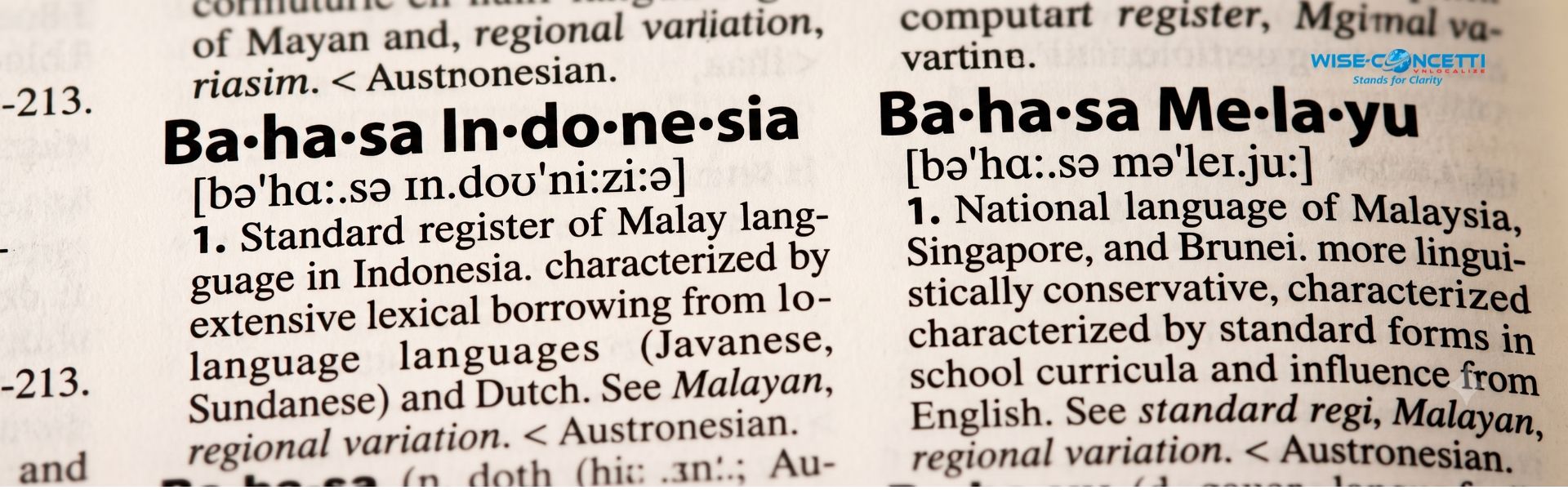
Whether your product requires separate translations for Indonesia and Malaysia depends primarily on your content type, legal exposure, and brand voice. While Bahasa Indonesia and Bahasa Melayu share close linguistic roots and substantial lexical overlap, their everyday vocabularies, formal registers, and technical terms diverge enough to introduce friction into digital user experiences. One single translation rarely serves every scenario well, yet splitting every asset into two isolated tracks is not always necessary either.
Context dictates the approach.
This guide provides a practical framework to evaluate your specific product setup, balance translation costs, and identify exactly where dedicated localization delivers measurable business value.
How Similar Are Bahasa Indonesia and Bahasa Melayu, Really?
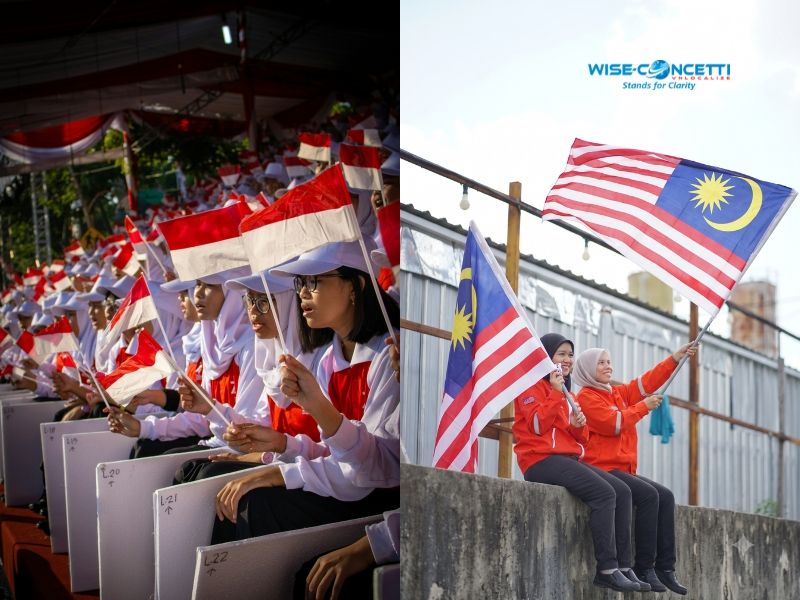
Bahasa Indonesia and Bahasa Melayu are standardized varieties of the same Austronesian macro-language, allowing a high degree of mutual intelligibility in everyday conversation. However, decades of separate administrative development, national standardization, and educational policies have shaped them into distinct communicative environments.
A Shared Root in Old Malay
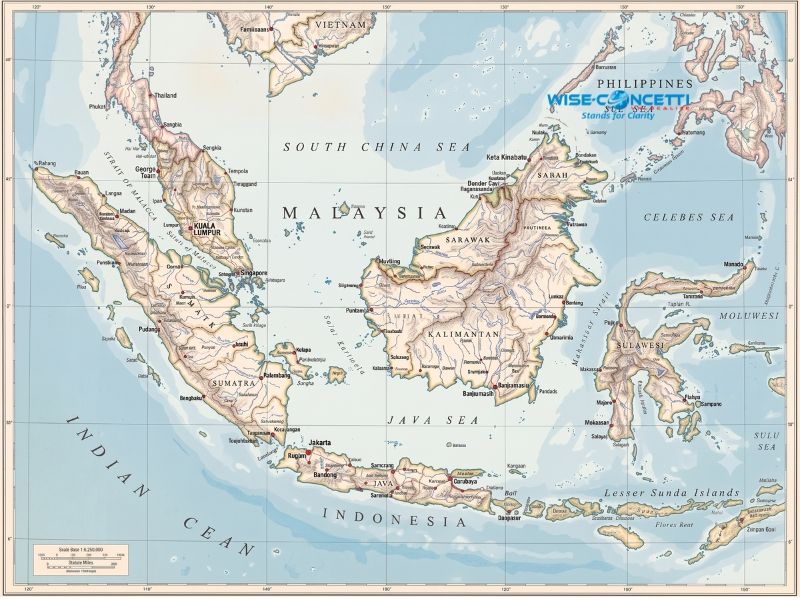
Both modern standards originate from Classical and Old Malay, which served for centuries as the maritime trading lingua franca across the Strait of Malacca and the Indonesian archipelago. Because of this common heritage, both languages share very similar core syntax, standard Subject-Verb-Object word order, and morphological affixation systems like the active verbal prefix me- and the causative suffix -kan. This shared structural framework enables a native speaker from Jakarta and a native speaker from Kuala Lumpur to follow the basic logic of a general sentence without formal cross-dialect training.
How Much Vocabulary Actually Overlaps
Lexical overlap across foundational, everyday vocabulary remains high across ancestral terms, kinship markers, and basic physical actions. Native speakers reading general prose or conversational narratives can typically follow the central meaning across borders without formal training.
Nuance matters here.
Linguistic similarity thins out rapidly as content shifts from conversational prose into modern commercial language. In specialized digital domains like software development, finance, and consumer law, the practical overlap drops noticeably as modern technical and colloquial loanwords diverge.
The Differences That Actually Create Risk in Digital Products
The real risks in digital localization stem from distinct modern terminology, loanword adaptation, and social registers. When engineering teams deploy a single translation indiscriminately, digital interfaces can confuse users or alter intended functionality.
False Friends: Same Spelling, Different Meaning
False friends, words with identical spelling that carry divergent definitions, represent one of the primary sources of UI translation errors. Because these words exist legitimately in both national vocabularies, basic automated checks and generic machine translation models often miss them entirely. Official reference databases, such as the Badan Pengembangan dan Pembinaan Bahasa in Indonesia and Dewan Bahasa dan Pustaka in Malaysia, document several critical divergences:
Word | Indonesia | Malaysia |
Bisa | Standard auxiliary verb meaning "can" or "to be able to." | Connotes "poison" or "venom," while boleh functions as the standard term for ability or permission. |
Kereta | Usually refers to a train (short for kereta api), whereas a car is called mobil. | The universal daily term for an automobile or car. |
Percuma | Translates to "useless," "pointless," or "in vain." | Widely used on promotional banners to mean "free of charge" (gratis). |
Deploying a mobile banner in Jakarta that announces "Percuma" to promote a free trial can lead many Indonesian consumers to read the promotion as futile, since the word is most commonly used to mean "useless" or "in vain".
Spelling and Loanword Differences
Different colonial histories introduced different external lexicons into each standard. Bahasa Indonesia integrated extensive administrative and everyday loanwords from Dutch, whereas Bahasa Melayu adopted terms largely from British English.
These separate external influences appear directly in digital user flows:
Concept | Indonesia | Malaysia |
| Subscription | langganan | langganan or subskripsi |
| "Office" / "department" | departemen (from Dutch departement) | jabatan |
| Network connection | koneksi | sambungan |
| Post office | kantor pos | pejabat pos |
Formality and Modes of Address
The two languages handle interpersonal deference and system hierarchy through distinct relational conventions. Indonesian digital products often employ an accessible, conversational style, using the respectful pronoun Anda or the informal kamu in lifestyle and social apps.
In contrast, standard written Malay in professional and enterprise contexts tends to maintain a higher baseline of formal deference. Push notifications, transactional emails, and automated chatbot prompts that sound natural in Jakarta can sound overly casual or unpolished to a corporate buyer in Kuala Lumpur.
When Does the Difference Actually Affect the User Experience?
The necessity of separating translations correlates directly with the visibility, regulatory liability, and depth of your content. Evaluating assets by operational risk helps avoid budget waste on low-risk labels while protecting brand integrity where precision is required.
Short UI Content (buttons, error messages, system labels)
Short interface elements often present manageable operational risk. Common actions such as "Save" (Simpan), "Cancel" (Batal), or "Delete" (Hapus / Padam) are broadly understood across both markets.
However, risks rise quickly when UI microcopy includes directional verbs or idioms vulnerable to false friends. To mitigate system errors and clipped components, teams can integrate thorough localization engineering and real-device software testing to verify interface clarity on local Android and iOS viewports.
Legal and Financial Content
Terms of service, privacy disclosures, licensing agreements, and checkout agreements carry significant legal exposure. Indonesia follows a civil law tradition inherited from Dutch law, while Malaysia's legal system is rooted in British common law, so statutory phrasing and legal terminology often do not map one to one.
Indonesian law generally requires agreements involving an Indonesian party to be written in Bahasa Indonesia, which makes an Indonesian-language version of formal contracts a legal matter as well as a linguistic one. Relying on a single translation for formal contracts risks creating legal ambiguity during cross-border disputes.
Marketing and Brand Voice
Marketing copy, landing pages, and campaign taglines represent the most culturally sensitive layer of any digital product. Marketing text does not merely communicate mechanical meaning; it establishes brand voice, emotional connection, and trust.
A promotional campaign written for Indonesian social media relies on local cultural cues and humor that may fall flat in Malaysia. For high-visibility promotional materials, investing in professional website localization and specialized creative translation ensures that messaging connects authentically with each audience.
Localize Search Intent Too, Not Just the Words
Localizing for Southeast Asia requires examining how local users search, not simply how strings translate. Consumers in Indonesia and Malaysia search Google using different keywords, phrasing structures, and loanword preferences, even when seeking the exact same product or service.
Directly translating an English search query into one variant and deploying it across both markets causes campaigns to miss real search demand in the other. In Indonesia, consumers often search using localized terms or Dutch-influenced loanwords. In Malaysia, users frequently mix British English search terms directly with conversational Malay in everyday queries.
For instance, an e-commerce platform targeting buyers for "used cars" might optimize for mobil bekas in Indonesia, while Malaysian consumers look for kereta terpakai or search entirely in English using "second hand car." If your SEO strategy uses a single keyword set across both regions, your organic visibility and paid acquisition efficiency in the secondary market can suffer significantly.
Does Splitting the Translation Really Cost Twice as Much?
Separating translations for Indonesia and Malaysia does not require doubling your localization budget. By organizing source assets systematically, development teams can share baseline linguistic data while investing strategically where cultural differences matter.
What Can Realistically Be Shared
Development teams can share structural internationalization assets and initial linguistic resources. Code extraction routines, base glossary frameworks, and core translation memory (TM) segments can be developed once.
When professional linguists translate content into the first variant, that finished translation can serve as a baseline reference for the second market. Adapting an existing, linguistically close text through native regional editing typically takes substantially fewer billable hours than translating from English a second time from scratch.
What Cannot Be Shared
Final linguistic reviews, in-country validation, and regulatory checks cannot be combined. Omitting review by a native linguist living in the target country introduces operational blind spots.
A native linguist in Malaysia understands local slang, recent administrative rulings, and commercial expectations that a linguist based in Jakarta may not encounter. Skipping native validation to save administrative costs often creates branding issues that cost far more to fix later.
How to Tell Whether Your Product Actually Needs Separate Translations
Choosing whether to commission two independent translations requires an objective assessment of your commercial priorities. Product managers can assess three key operational factors.
The Size and Importance of Each Market
Review the revenue potential of both territories:
- Is one market your primary revenue driver while the other represents an exploratory test?
- Are both countries designated as core growth regions for your product?
If Malaysia represents an exploratory market with modest revenue goals, using a single, carefully neutralized translation across general UI may serve as a sensible short-term strategy. If both territories drive meaningful revenue, deploying dedicated translations for each locale protects user retention.
The Type of Content That Makes Up Most of Your Product
Audit the composition of your translatable files against your risk profile:
- High viability for shared adaptation: System setup instructions, standard technical dashboards, and internal reference guides.
- Mandatory separation: Customer-facing ad copy, checkout flows, binding legal agreements, and app store listings.
Many software companies use a hybrid model. They maintain shared technical strings where overlap is high, while managing separate workflows for marketing assets and public communications.
Growth Stage and Brand Sensitivity
Your organization's current scale influences your acceptable margin for linguistic error. Early-stage startups working with limited seed funding often prioritize core functional understanding over stylistic refinement, launching quickly with a single adaptation.
As companies grow and user bases expand, brand risks rise. Established consumer brands with wide public visibility rarely risk deploying awkward copy, because reputational damage from a tone-deaf campaign often outweighs the cost of proper localization.
The Risk Most Teams Underestimate: One Vendor, No Dedicated Native Linguists
A common challenge in Southeast Asian localization is assuming that every vendor deploys separate, native linguists for each country. Without clear oversight, project teams may discover late in the process that their assets were handled through a single generalist workflow.
Why This Happens More Than You'd Think
Under aggressive turnaround times and tight pricing constraints, some agencies route both Indonesian and Malay deliverables through a single translation team, making only minor surface edits rather than genuine linguistic adaptations.
This practice usually stems from limited regional staff, gaps in vendor qualification, or attempts to preserve thin margins. For corporate buyers, the outcome is often content that reads like an artificial hybrid dialect, failing to connect naturally with users in either country.
Questions to Ask a Vendor Before You Sign
To ensure your localization investment delivers genuine regional adaptation, ask prospective language partners direct operational questions:
- Do you maintain separate, native linguistic teams based respectively in Indonesia and Malaysia for each language pair?
- What specific quality assurance checks do you use to detect false friends and technical loanword divergences?
- Can you share blinded project samples demonstrating how your team adapted technical or legal copy between these two markets?
- How do your engineers format locale-specific currencies, dates, and address structures?
Illustrative Scenario: The Cost of a Shared Checkout Flow
Note: the following scenario is a hypothetical illustration designed to highlight operational risks; actual business outcomes vary depending on product category, industry, and implementation quality.
Consider a regional e-commerce application that decided to use a single translation across its mobile checkout funnel to reduce launch costs. The vendor translated the English prompt "Free Shipping on Your First Order" using the word Percuma, which works well for Malaysian shoppers.
When the application launched in Indonesia, conversion rates on new user registrations lagged behind expectations. Subsequent user testing revealed that Indonesian shoppers understood the banner as "Pointless Shipping on Your First Order," assuming the promotion was broken or unavailable. Updating the copy to Gratis Ongkir, re-submitting application builds to mobile stores, and running corrective promotions required four weeks of additional work, ultimately costing more than the original price of independent in-country reviews.
Localization Readiness Checklist
Use this phased checklist to evaluate your linguistic and technical readiness when planning localization for Indonesia and Malaysia.
Phase | Checklist item |
| Phase 1 Before Localization (Planning and Architecture) | Audit your content inventory to separate low-risk system strings from high-risk marketing and legal assets. |
| Conduct regional keyword research to identify divergent search terms and loanword habits in each country. | |
| Define your fallback approach: decide whether to run a single adapted base or establish two separate localization tracks from the start. | |
| Build a regional glossary that highlights critical false friends like bisa, kereta, and percuma. | |
| Phase 2 During Localization (Execution and Engineering) | Translate into the primary market first, then use a native linguist from the second market to adapt the text. |
| Integrate multilingual desktop publishing workflows to adjust for character expansion and text wrapping across localized packaging and banners. | |
| Check that date formats, number grouping, and currency symbols (IDR versus MYR) align with local platform expectations. | |
| Avoid generic, automated spellcheckers for dialect-specific loanwords without verified dictionary rules. | |
| Phase 3 After Localization (Testing and QA) | Perform functional and linguistic testing on actual mobile devices running in Indonesia and Malaysia. |
| Run in-country reviews with local team members or partners to verify tone, politeness registers, and clarity. | |
| Monitor user analytics and customer support inquiries after launch to catch and fix unexpected vocabulary confusion quickly. |
FAQ
Are Bahasa Indonesia and Bahasa Melayu the same language?
Linguistically, they are standardized varieties derived from the same Austronesian root (Classical Malay). In practice, they function as independent national languages with their own official regulatory bodies, spelling differences in many words, and different technical vocabularies.
Can one translation work for both markets?
A single translation can convey general informational meaning for utilitarian dashboards or basic operational manuals. However, it often fails to deliver a natural user experience for customer-facing marketing, brand communications, and legally binding agreements due to divergent registers, spelling rules, and false friends.
Does splitting the translation really cost double?
Splitting translations does not need to double your budget. By translating into your primary market first and using native transadaptation for the second market, companies can achieve authentic dual-market coverage at a fraction of the cost of two independent translations from scratch.
How do I know if a vendor has separate native linguists for each language?
Ask the provider directly about their linguist screening process, in-country locations, and quality assurance workflows. Established providers should explain how their linguistic validation differs between Jakarta and Kuala Lumpur and demonstrate transparent translation memory management for both locales.
Conclusion
Navigating Your Southeast Asian Localization Strategy
No universal formula applies equally to every product entering Indonesia and Malaysia. Deciding whether to split translations between Bahasa Indonesia and Bahasa Melayu requires evaluating your product's risk tolerance, technical setup, and revenue targets. By identifying high-risk content layers and managing shared linguistic resources systematically, brands can optimize localization spending while delivering authentic user experiences in both markets.
Wise-Concetti brings more than two decades of Southeast Asian localization experience, an ISO 9001:2015-certified quality management system, and dedicated in-house operations across Vietnam, Thailand, Indonesia, and Malaysia. Whether you need strategic guidance on regional language pairs or rigorous quality assurance across complex software platforms, our team can help you build a practical localization roadmap. Learn more about our regional coverage across different languages, explore our core translation services, or consult our team for tailored interpretation and localization solutions to schedule a complimentary evaluation of your multilingual assets.
 Trending
  Categories